
Welding, rivets, screws, and bolts have been used for decades to assemble metal components. They remain important in many industries. But manufacturers today also need faster assembly, cleaner finishes, less heat damage, and more flexibility in product design.
This is where metal to metal adhesive bonding can offer a practical alternative.
A high-performance adhesive can join metal parts without drilling holes, adding fasteners, or applying high heat. In the right application, it can reduce the need for traditional assembly methods and simplify production.
For B2B manufacturers, the goal is not to replace every weld or fastener. It is to identify where adhesive bonding can deliver a better assembly process.
Why Are Manufacturers Looking Beyond Traditional Assembly?
Traditional joining methods have some limitations.
Welding uses high heat. This can cause distortion in thin metal parts and may damage coatings or finished surfaces. It can also require additional grinding, cleaning, or finishing.
Mechanical fasteners such as rivets, screws, and bolts require holes or other preparation. They can add weight and create stress points in the assembly.
These issues can increase production steps and affect the final appearance of the product.
A metal to metal adhesive provides another way to join components. It creates a bond across the joining surface instead of relying only on individual fastening points.
How Does Metal to Metal Adhesive Work?
A structural adhesive is applied between two prepared metal surfaces. The adhesive then cures and forms a strong bond between the substrates.
Unlike a single weld point or fastener, adhesive can cover a larger joint area. This can help distribute loads across the bond line.
The performance of the joint depends on several factors. These include the type of metal, surface preparation, joint design, adhesive chemistry, temperature, load, and curing conditions.
For this reason, adhesive selection should always be based on the actual application.
6 Benefits of Metal to Metal Adhesive
1. Reduces Heat-Related Damage
One of the biggest benefits of adhesive bonding is that it does not require the high heat used in welding.
This can help reduce warping and distortion in thin metal sheets. It can also protect painted, coated, or finished surfaces.
For manufacturers working with precision components, this can reduce the need for post-assembly correction.
2. Reduces the Need for Rivets and Fasteners
A metal to metal adhesive can reduce dependence on screws, rivets, bolts, and other mechanical fasteners in suitable applications.
Fewer holes can mean fewer drilling operations. It can also reduce the number of visible fasteners on the finished product.
This is useful when manufacturers want a clean appearance and a streamlined assembly process.
3. Creates a Cleaner Finished Surface
Weld beads, rivet heads, and screw heads can affect the appearance of a product.
Adhesive bonding creates a hidden or less visible joint when designed correctly. This makes it useful for panels, enclosures, interiors, appliances, and other products where appearance matters.
A cleaner surface can also reduce some finishing requirements.
4. Helps Join Dissimilar Metals
Manufacturers often need to combine different metals in one product.
For example, an assembly may use aluminium for weight reduction and steel for strength. Joining these materials through traditional methods can require careful process control.
A suitable metal bonding adhesive can provide an effective way to join dissimilar substrates while supporting the overall design.
5. Distributes Stress Across the Joint
Mechanical fasteners and spot welds can concentrate stress around specific points.
Adhesive bonding spreads the connection over the bonded area. This can provide more uniform stress distribution when the joint is properly designed.
It can be particularly useful for sheet-metal assemblies and components exposed to vibration or repeated movement.
6. Supports Efficient Assembly
Adhesive bonding can combine joining and sealing in some applications. It can also reduce drilling and other secondary operations.
Fast-curing structural adhesives can help manufacturers achieve handling strength within a defined production cycle.
The result can be a simpler assembly process with fewer individual operations.
Where Can Metal to Metal Adhesive Replace Traditional Assembly?
The suitability of adhesive bonding depends on the product and operating conditions. However, several industries can benefit from it.
Automotive and Transportation
Adhesives can be used for metal panels, body components, interiors, brackets, and other assemblies where weight, appearance, vibration, and surface quality matter.
HVAC Manufacturing
Metal adhesives can support the assembly of sheet-metal panels, housings, ducts, and equipment components. They can help maintain clean surfaces without introducing welding heat.
Elevator Manufacturing
Adhesive bonding can be used for suitable metal panels and interior components. It can help achieve a smooth appearance while avoiding heat-related damage to finished surfaces.
Electrical Enclosures
Control cabinets, panels, and metal enclosures can use adhesive bonding where clean assembly and reliable metal joints are required.
Metal Fabrication and Industrial Equipment
Fabricators can use structural adhesives for panels, brackets, housings, and mixed-material assemblies. This can reduce drilling and welding in suitable designs.
Metal Adhesive vs Welding and Fasteners
Adhesive bonding is not a universal replacement for welding or mechanical fastening.
Welding may still be the preferred method for certain heavy structural applications, extreme temperatures, and designs with specific engineering or regulatory requirements.
Mechanical fasteners may also be required where the design needs mechanical retention or easy disassembly.
The right choice depends on the load, temperature, environment, joint design, materials, and production requirements.
For a detailed comparison of adhesive bonding and welding, see our guide to Metal Bonding Adhesive vs Welding.
Looking for metal bonding adhesive in India
How to Decide if Adhesive Bonding Is Right for You
Before switching to a metal to metal adhesive, manufacturers should evaluate:
- Metal and substrate type
- Joint size and design
- Required bond strength
- Operating temperature
- Vibration and movement
- Moisture and chemical exposure
- Surface preparation
- Required cure time
- Production volume and assembly speed
Testing is important before introducing a new adhesive into production. A supplier can help evaluate the substrate, joint design, application process, and required performance.
For information on different adhesive technologies and their applications, explore our guide to Types of Metal-to-Metal Adhesives.
Build Better Metal Assemblies With Adhesive Bonding
A metal to metal adhesive can give manufacturers an alternative to traditional assembly methods such as welding, rivets, screws, and bolts.
It can reduce heat-related damage, improve surface appearance, support dissimilar-metal bonding, distribute stress, and simplify selected production processes.
The key is not to replace traditional joining methods blindly. Instead, identify applications where adhesive bonding provides a clear manufacturing advantage.
With the right adhesive, joint design, and surface preparation, adhesive bonding can become a valuable part of a modern industrial assembly process.
Looking for the right metal to metal adhesive for your application? Share your substrates, joint design, operating conditions, and production requirements with Supex to identify a suitable industrial bonding solution.
FAQs About Metal to Metal Adhesive
1. What is the best adhesive for steel bonding?
The best metal glue depends on the application and materials used. Structural adhesives such as MMA (Methyl Methacrylate) adhesives are widely preferred for industrial bonding because they provide high strength, vibration resistance, and long-term durability.
2. Can metal bonder replace welding?
Yes, in many applications, industrial metal adhesive can replace welding. Adhesives eliminate heat distortion, reduce surface damage, and provide uniform stress distribution. They are especially useful for thin metals and mixed-metal bonding.
3. How strong is structural metal glue?
A high-quality structural metal bonder can create very strong structural bonds capable of handling heavy loads, vibration, and impact. Many industrial metal bonding adhesives are designed to perform reliably under demanding conditions.
4. What metals can be bonded using metal adhesive?
Metal bonders can join many types of metals, including:
Stainless steel
Mild steel
Aluminum
Copper
Galvanized metals
Metal alloys
This makes metal glue solutions suitable for a wide range of industrial uses.
5. Is surface preparation necessary before applying metal adhesive?
Yes, proper surface preparation is important when using a structural metal bonder. Cleaning and lightly roughening the surface helps improve adhesion strength and ensures long-lasting bonding performance.
6. How long does structural metal adhesive take to cure?
Curing time depends on the type of steel bonding adhesive is used. Some fast-setting adhesives cure within minutes, while structural adhesives may require several hours to achieve full strength.
7. Is steel bonding adhesive resistant to vibration?
Yes, most structural metal bonding systems are designed to absorb vibration and shock. This makes them suitable for automotive, machinery, and industrial equipment applications.
MS adhesive applications in transportation indutry
MS polymer adhesives and sealants are suitable for train, truck and bus assembly. The most common applications include:
- Bodywork assembly: Meal bonding adhesive offer a strong and easy to apply system for bonding bus frames, truck cabins and body structures of trains.
- Sealing and bonding windows: sealing and bonding vehicle windows and windshields. The flexibility of MS polymer adhesives and sealants guarantee high performance on windows and windshields of vehicles.
- Sealing floors, roofs and interior and exterior panels: MS sealants are also used for sealing floors, roofs and side panels of vehicles. Their flexibility allows for high performance, whereas the minimum surface preparation and ability to bond dissimilar materials guarantee assembly efficiency.
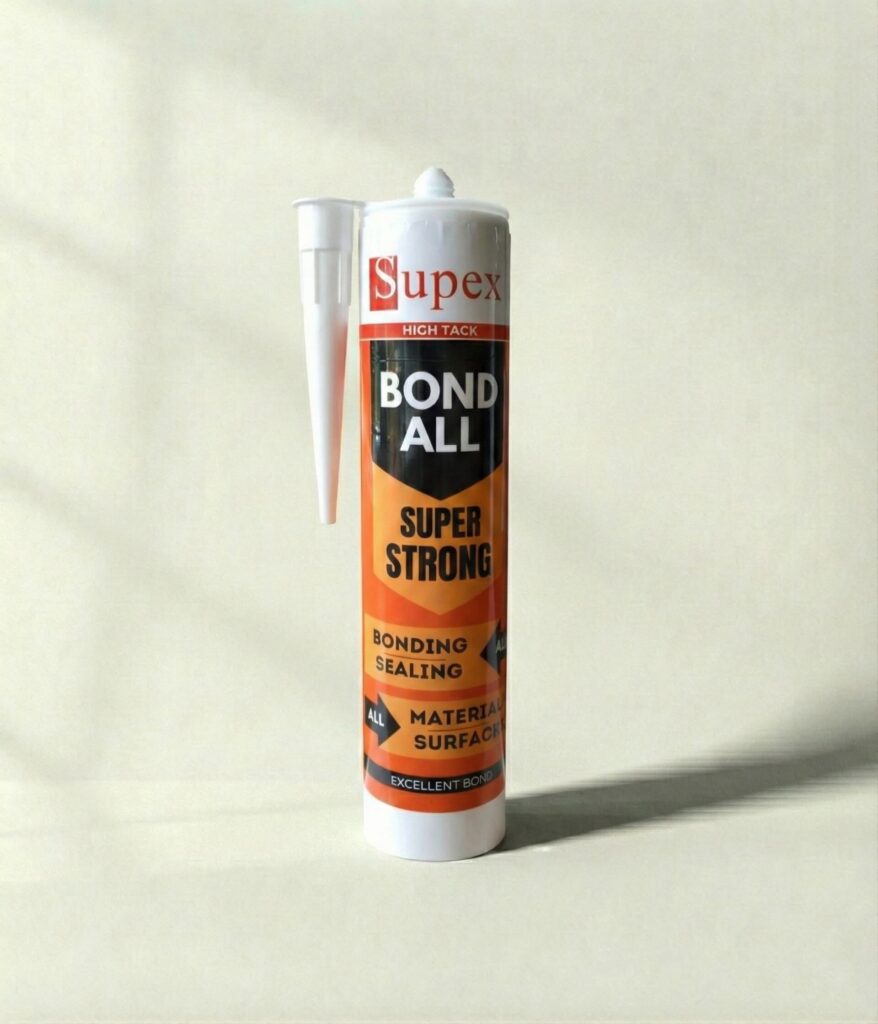


Metal Bonding: 2 Part MMA Structural Glue
Two-part MMA (Methyl Methacrylate) adhesives offer major advantages for metal bonding:
- Exceptional strength – High tensile, shear, peel, and impact resistance for durable, structural metal joints.
- Minimal surface prep – Bonds well even on oily or lightly contaminated metals, saving time and effort.
- Fast cure – Quick fixture (10–30 minutes) and full strength at room temperature, boosting production speed.
- Versatile bonding – Joins dissimilar materials (metal-to-plastic, metal-to-composite) without stress or failure.
- Good flexibility – High elongation absorbs vibration, shock, and thermal expansion differences.
- Gap-filling ability – Fills larger gaps effectively while maintaining strong performance.
- Environmental resistance – Excellent weather, UV, chemical, and temperature resistance for long-term reliability.
- Aesthetic & lightweight – Replaces welding/rivets with clean, corrosion-free, evenly stressed joints.
In short, two-part MMA adhesives deliver fast, strong, and forgiving metal bonding with less preparation and superior performance on mixed substrates—ideal for automotive, marine, aerospace, and industrial applications.
2 Responses
Send more details
Sending details by mail