
Construction Adhesives for Building, Interior and Installation Applications
Choosing the right construction adhesive helps create durable bonds, cleaner finishes and more efficient installations. Whether you are bonding wood, fixing decorative panels, assembling building components or sealing construction joints, the adhesive must match the materials and conditions of the application.
Supex offers construction bonding and sealing solutions across PUR adhesives, polyurethane (PU) products, MS polymer adhesives and silicone sealants. Each technology serves different requirements, from rigid material bonding to flexible joints and weather-resistant sealing.
Explore the product matrix below to identify a suitable solution for your project, compare the available product types and request guidance from the Supex team.
Looking for a construction adhesive for a specific material? Start with the application and substrate, then select a product designed for that purpose.
Find the Right Construction Adhesive
Different construction jobs require different adhesive properties. Use this guide to narrow down your options.
| Application | Adhesive or sealant type to consider | Supex product to explore |
|---|---|---|
| Wood, plywood and compatible insulation applications | PUR adhesive | Supex 7150 PUR Adhesive |
| General construction bonding and flexible sealing | PU sealant | Supex PU 25 |
| Wall panels, decorative elements and mixed-material bonding | MS polymer adhesive | Supex 600 MS Polymer Adhesive |
| High-tack fixing for suitable interior and construction materials | High-tack construction adhesive | Supex Bond All High Tack |
| Glass, aluminium and construction joint sealing | Neutral-cure silicone | Supex Neutral Plus Silicone Sealant |
| Transparent sealing around suitable glass and decorative installations | Clear silicone sealant | Supex 200 Clear Silicone Sealant |
Product suitability depends on the materials, joint design, load, exposure conditions and the manufacturer’s technical recommendations. A sealant designed for flexible joints should not automatically be treated as a structural bonding adhesive.

Explore Supex Construction Adhesive Solutions
1. PUR Adhesive for Wood and Compatible Substrates
Polyurethane reactive (PUR) adhesives are used in applications requiring durable bonding between compatible materials. The appropriate PUR formulation depends on the substrate, manufacturing or installation process, moisture exposure and required bond performance.
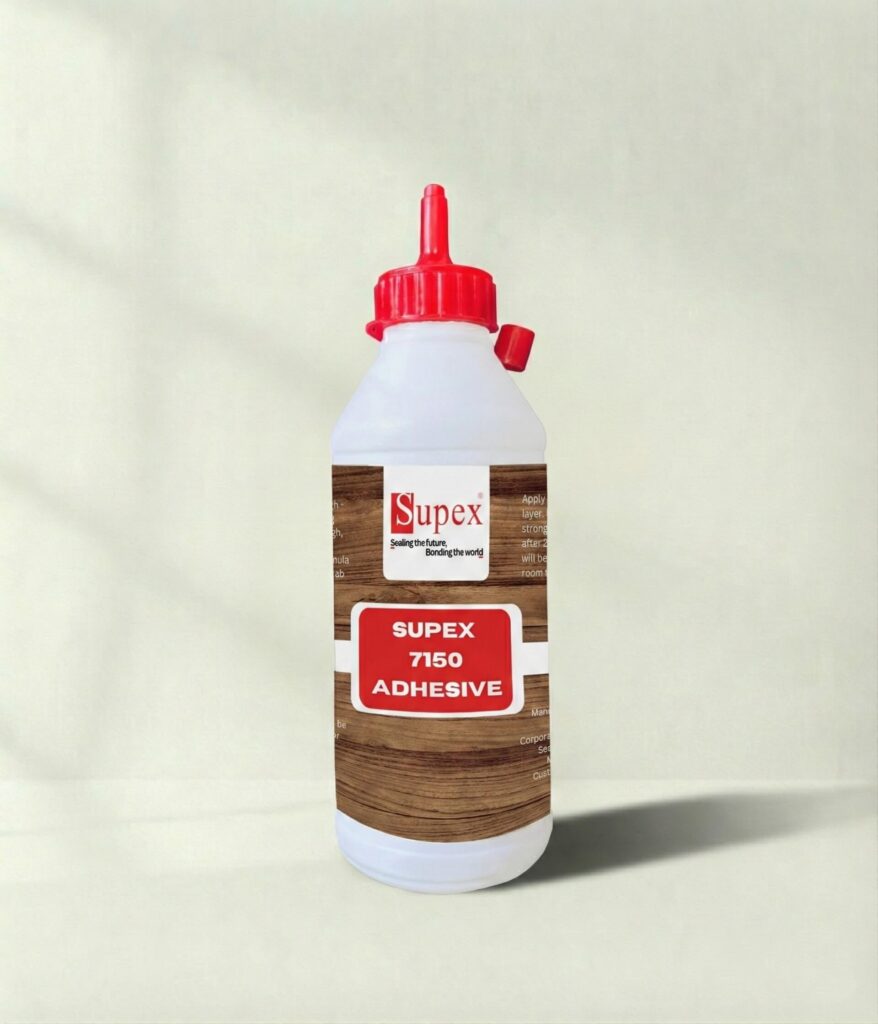
Supex 7150 PUR Adhesive is a moisture-curing polyurethane adhesive intended for applications including wood and compatible insulation materials. Its technical information lists D4 water resistance and a temperature resistance range of −30°C to +100°C under the stated test conditions.
Consider this product for:
Wood and plywood bonding
Compatible insulation applications
Construction and assembly work
Applications requiring durable bonding between approved substrates
Explore the product: Supex 7150 PUR Adhesive.
Before use, confirm that the adhesive is suitable for the specific substrate and assembly process.
2. PU Products for Bonding and Flexible Sealing
Polyurethane products are used in construction for several purposes, including flexible joint sealing and selected bonding applications. It is important to distinguish a PU adhesive from a PU sealant: the products may have different performance requirements and should not be treated as interchangeable.
Supex PU 25 High-Performance Polyurethane Sealant is designed for flexible sealing and adhesion in construction, automotive and industrial applications. It can be considered for suitable joints involving materials such as concrete, metal, wood, aluminium and masonry, subject to compatibility checks.
Consider a PU product when your project requires:
Flexible sealing around suitable construction joints
Sealing between compatible building materials
Weather-resistant joint protection
An elastic seal that accommodates movement within its design limits
Explore the product: Supex PU 25 High-Performance Polyurethane Sealant.
Choose a product according to whether the job requires bonding, sealing or both. For expansion joints and other movement-sensitive applications, verify the required movement capability and joint dimensions.
3. MS Polymer Adhesive for Flexible, Multi-Material Bonding
MS polymer adhesives are used in construction and interior installations where bonding strength and flexibility are both important. Depending on the formulation, they can be suitable for bonding compatible combinations of metal, glass, wood, stone and composite materials.
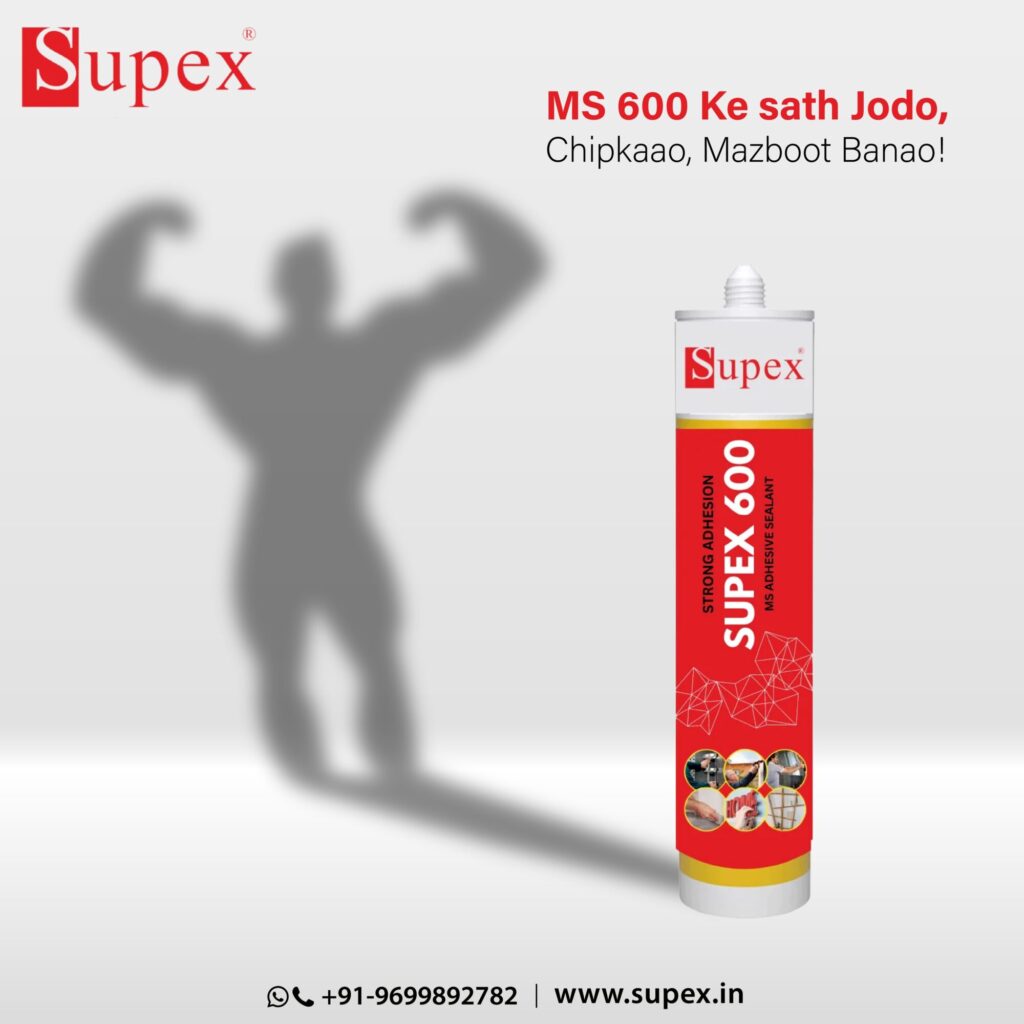
Supex 600 MS Polymer Adhesive is designed for strong, flexible bonding across a range of compatible substrates. It can be considered for suitable construction panels, decorative elements, interior installations and mixed-material assemblies.
Consider an MS polymer adhesive for:
Decorative wall panels
Skirting and mouldings
Suitable metal-to-panel assemblies
Interior installation and finishing
Mixed-material bonding where flexibility is required
Explore the product: Supex 600 MS Polymer Adhesive.
For installations involving heavy panels, overhead mounting or safety-critical components, verify load requirements and follow the product instructions. Mechanical fixing may still be necessary.
4. High-Tack Construction Adhesive for Installation Work
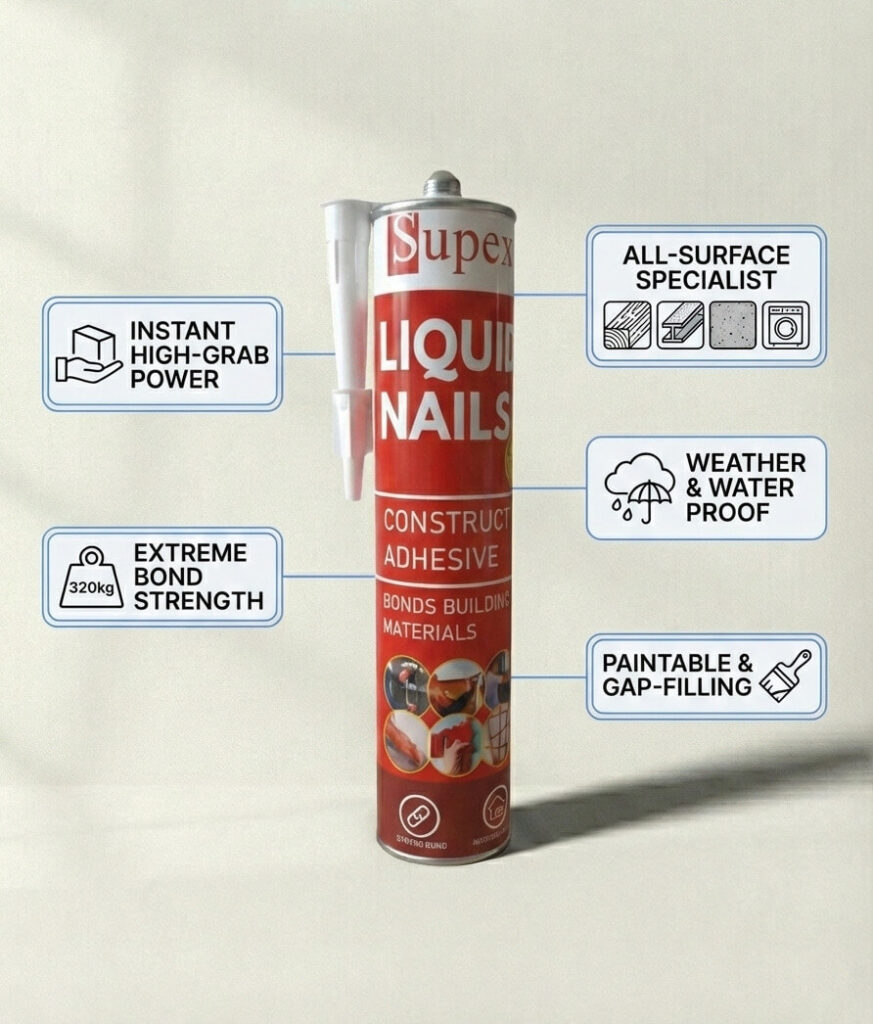
High-tack construction adhesives can help simplify the installation of suitable panels, trims, mouldings and decorative components. They are particularly useful when the installer wants a clean finish without visible fasteners, provided the application and load are appropriate for adhesive-only fixing.
Supex Bond All High Tack Adhesive is an option to consider for compatible construction and interior bonding applications.
Potential applications include:
Suitable wall and decorative panels
Skirting and mouldings
Interior finishing components
Selected wood, metal and building-material combinations
Explore the product: Supex Bond All High Tack Adhesive.
Check the substrate compatibility, initial grab, curing requirements and support instructions before installing heavy or overhead components.
5. Silicone Sealants for Construction and Glazing
Silicone sealants are generally selected for flexible sealing rather than as a universal substitute for construction adhesives. They are useful where moisture resistance, weather exposure and continued joint flexibility are important.
Supex offers silicone options for different sealing requirements.
Supex Neutral Plus Silicone Sealant
Consider this neutral-cure silicone for suitable glass, metal, aluminium and construction sealing applications where material compatibility and weather resistance are important.
Typical applications include:
Window and door perimeter sealing
Glass and aluminium installations
Suitable façade and construction joints
Weather sealing around compatible building components
Supex 200 Clear Silicone Sealant
Consider a clear silicone sealant where a transparent finish is desired around compatible glass, glazing and decorative applications.
Typical applications include:
Suitable glass and aluminium joints
Shopfront and showcase sealing
Selected decorative installations
General-purpose sealing where a clear finish is required
Select the silicone type based on the substrate and application. Silicone should not be used as a structural glazing adhesive unless the specific product and glazing system are expressly designed and approved for that purpose.
Construction Adhesive Comparison: PUR vs PU vs MS Polymer vs Silicone
The best construction adhesive depends on what you are trying to achieve. Compare the general roles of each technology before choosing a product.
| Technology | Main role | Common application areas | Key selection consideration |
|---|---|---|---|
| PUR adhesive | Durable bonding | Wood, compatible insulation and assembly applications | Substrate compatibility, curing conditions and required bond performance |
| PU adhesive or sealant | Product-dependent bonding or flexible sealing | Selected construction assemblies and joints | Confirm whether the specific product is intended for bonding, sealing or both |
| MS polymer adhesive | Flexible, multi-material bonding | Panels, trims, interior installations and compatible mixed substrates | Initial grab, cured strength, movement and exposure conditions |
| Silicone sealant | Flexible sealing | Glazing, windows, glass, aluminium and weather-exposed joints | Joint movement, cure type and substrate compatibility |
These are general selection guidelines rather than a ranking of product strength. Actual performance varies by formulation, surface preparation, joint design and installation conditions.
Common Construction Adhesive Applications
Wall and Decorative Panels
Adhesives can be used for decorative panels, PVC panels, composite panels and other interior elements. High-tack products can help create a clean installation while reducing visible mechanical fixings.
Wood and Interior Work
Construction adhesives are useful for skirting, trims, mouldings and other interior installations. When selecting a product, consider initial grab, cure time, flexibility, paintability and compatibility with the substrate.
Metal and Mixed-Material Bonding
Metal may need to be bonded to aluminium, glass, wood, concrete, plastics or composites. These applications require careful attention to surface preparation and adhesive compatibility.
Flooring
PU adhesives are commonly used for flooring applications where durable bonding is required. The adhesive should be selected according to the flooring material, substrate and expected movement.
Wet Areas
Bathrooms, kitchens and other wet areas require products designed for moisture exposure. Silicone or suitable hybrid polymer products may be appropriate depending on whether the requirement is sealing, bonding or both.
How to Choose the Right Construction Adhesive
Before selecting a construction adhesive, assess the following factors.
1. Identify the materials
Determine whether you are bonding wood, concrete, metal, glass, stone, PVC or composite materials. Check that the chosen product is compatible with both surfaces.
2. Define the application
Bonding a decorative panel is different from sealing a window joint or assembling a load-bearing component. Select an adhesive or sealant designed for the task.
3. Consider movement and flexibility
Some assemblies require a relatively rigid bond, while others experience expansion, contraction or vibration. Choose a formulation that accommodates the expected movement.
4. Check moisture and weather exposure
Indoor dry areas, bathrooms, façades and exterior installations have different requirements. Review the product’s stated water resistance, weathering performance and permitted service conditions.
5. Review installation and curing requirements
Surface preparation, application temperature, open time, clamping or temporary support, and curing conditions all affect the finished result. Follow the product technical data sheet.
6. Confirm load and safety requirements
Do not assume that a high-tack adhesive can replace screws or other mechanical fixings in every situation. For heavy, overhead, structural or safety-critical installations, follow the project specifications and obtain technical guidance where needed.
Conventional Wash Basin installation
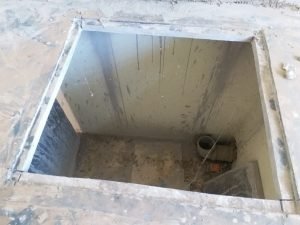 Wash basin installation onto the granite top is a cumbersome process without the right knowledge of adequate glue or sealant to be applied. In addition to knowing which sealant to use, it is also essential to know the right method of installation.
Contractors generally use white cement/ putty to seal the edges between basin and granite due to insufficient knowledge of sealants . The ‘putty’ cracks with time and unbinds the basin. As a result, leakage from the edges.
Surface Preparation Matters
Even a high-performance construction adhesive can fail when the surface is poorly prepared.
Before applying adhesive:
- Remove dust, dirt and loose particles.
- Remove oil, grease and other contaminants.
- Check that both substrates are compatible with the product.
- Follow primer or surface-treatment instructions where required.
- Apply the adhesive using the recommended method.
- Support the bonded material during curing when necessary.
- Allow the adhesive to fully cure before applying the intended load.
Good surface preparation is often just as important as choosing the right adhesive.
Common Causes of Adhesive Failure
Bonding problems are not always caused by the adhesive. Common causes include:
- Selecting the wrong adhesive chemistry
- Poor surface preparation
- Bonding incompatible materials
- Incorrect adhesive application
- Insufficient curing time
- Excessive joint movement
- Exposure to conditions outside the product specification
For critical or structural applications, always follow the product technical data sheet and project specifications.
Why Choose Supex Construction Adhesives?
Supex offers a range of construction adhesives and sealants for different bonding, sealing and installation requirements.
The construction range includes PU adhesives, MS Polymer adhesives, silicone sealants, PU sealants, foam sealants and high-tack bonding solutions.
Products such as Supex 600 MS Polymer Adhesive, Supex 7150 PUR Adhesive, Bond All High Tack and Neutral Plus Silicone Sealant address different application needs.
The key is not simply choosing the strongest adhesive. It is choosing a product that matches the substrate, load, movement and environment of the application.
Frequently Asked Questions About Construction Adhesives
What is construction adhesive used for?
Construction adhesive is used to bond compatible building and interior materials, including wood, panels, metal and selected composite materials. The right product depends on the substrate, required bond performance and installation conditions.
Which construction adhesive is best?
There is no single best construction adhesive for every job. PUR adhesives, PU products, MS polymer adhesives and silicone sealants have different roles. Choose according to the materials, application, movement, moisture exposure and technical requirements.
What is the difference between PUR and PU adhesive?
PUR commonly refers to polyurethane reactive adhesive technology, while PU is a broader abbreviation for polyurethane. The precise meaning depends on the product and its formulation. Review the technical data sheet rather than assuming all PUR and PU products perform identically.
Is MS polymer suitable for construction bonding?
Certain MS polymer adhesives are suitable for bonding compatible construction and interior materials. Check the product’s approved substrates, load requirements, curing instructions and exposure limitations before use.
Is silicone a construction adhesive?
Silicone is used mainly as a flexible sealant, although some silicone products also support specified bonding applications. It should not automatically be substituted for a high-strength construction adhesive.
Can construction adhesive replace screws and nails?
It may replace visible mechanical fasteners in some suitable applications, but not all. Heavy, overhead, load-bearing or safety-critical installations may require mechanical fixing or an engineered fixing system.
Which construction adhesive is suitable for wood?
The choice depends on the type of wood, other bonded substrate, moisture exposure and required bond performance. Supex 7150 PUR Adhesive is one option to evaluate for compatible wood-bonding applications.
Which product should I use for window and glass sealing?
A suitable silicone sealant may be appropriate for compatible window, glass and aluminium sealing applications. Consider Supex Neutral Plus for relevant neutral-cure sealing needs or Supex 200 Clear Silicone Sealant when a clear finish is required. Confirm product suitability for the exact joint.
How long does construction adhesive take to cure?
Cure time varies by product chemistry, temperature, humidity, substrate and bond-line thickness. Follow the manufacturer’s technical data sheet and do not load the assembly before the specified conditions have been met.
Where can I find a construction adhesive supplier in India?
Explore the Supex construction adhesive and sealant range to compare product types and identify a suitable solution. For product recommendations, availability or a quotation, contact the Supex team with details of the materials and intended application.
Find the Right Construction Adhesive for Your Project
Choosing the right product can help improve installation quality, durability and finishing. Tell us what materials you need to bond or seal, where the application will be used and what performance you require.
Contact Supex for product guidance and a quotation.
Explore the full range of construction adhesives and sealants to compare available solutions for your application.
One Response