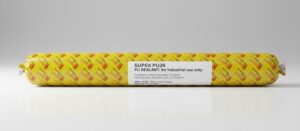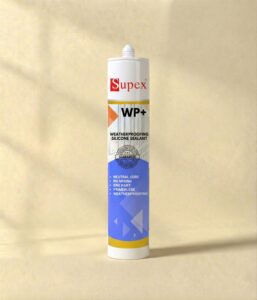
Waterproofing Sealant for Construction Joints in India
Supex waterproofing sealants are engineered to deliver reliable joint protection in demanding construction environments across India. Designed for contractors, builders, waterproofing applicators, and infrastructure developers, our sealants provide long-lasting waterproofing performance for expansion joints, facades, roofs, and industrial structures.
Our polyurethane and silicone waterproofing sealants offer strong adhesion to concrete, masonry, metal, glass, and composite surfaces. These high-performance materials help prevent water ingress, joint failure, and long-term structural damage in residential, commercial, and industrial projects.
What is a Waterproofing Sealant?
A waterproofing sealant is a flexible sealing material used to block water penetration through joints, gaps, and cracks in building structures. These sealants are critical in modern construction systems where movement joints and structural connections require durable and flexible waterproof protection.
Supex sealants are widely used in:
- Expansion joints
- Construction joints
- Facade systems
- Roofing joints
- Wet areas
- Infrastructure structures
High-quality waterproof sealants help maintain structural integrity, reduce maintenance costs, and extend the service life of buildings and infrastructure assets.
Key Benefits of Supex Waterproofing Sealants
Supex sealants are developed to meet the technical demands of modern construction projects in India.
Key performance benefits include:
- Excellent adhesion to concrete, masonry, metal, and glass
- High flexibility to accommodate joint movement
- Long-term resistance to water penetration
- UV and weather resistance for exterior applications
- Reduced risk of leakage and structural damage
- Suitable for commercial and infrastructure-scale projects
- Low shrinkage during curing
- Durable performance in harsh environmental conditions
These advantages make Supex sealants a reliable choice for contractors managing high-performance waterproofing systems.
Applications of Waterproofing Sealant
Waterproofing sealants play a critical role across multiple construction segments. Supex sealants are suitable for both vertical and horizontal joint sealing applications.
Expansion Joint Waterproofing
Expansion joints are designed to absorb structural movement caused by temperature changes, loading, and settlement. Without proper sealing, these joints become major sources of water leakage. High-performance joint sealant solutions
Supex sealants provide:
- Flexible joint sealing
- Movement accommodation
- Long-term waterproof performance
- Crack prevention support
Common applications include:
- Building expansion joints
- Control joints
- Movement joints
- Basement joints
- Structural separation joints
Facade and Exterior Wall Sealing
Exterior facade joints are constantly exposed to rain, wind pressure, and temperature changes. Reliable waterproofing sealants protect building envelopes from moisture penetration. weather-resistant silicone sealant
Typical facade applications include:
- Curtain wall joints
- Panel joints
- Window perimeters
- Glass-to-concrete joints
- Exterior cladding joints
Proper sealing prevents water leakage, corrosion, and structural deterioration.
Roof Waterproofing and Terrace Joints
Roof joints are among the most vulnerable areas in any building. Supex PU sealants help protect roof systems from leakage and weather damage.
Roof applications include:
- Roof expansion joints
- Terrace joints
- Metal roof joints
- Skylight joints
- Parapet joints
These applications require sealants with strong weather resistance and long-term durability.
Industrial and Infrastructure Projects
Infrastructure and industrial facilities demand high-performance waterproofing solutions that can withstand heavy exposure and operational stress.
Typical projects include:
- Warehouses
- Factories
- Industrial buildings
- Bridges
- Tunnels
- Airports
- Parking structures
- Commercial complexes
Supex Polyurethane sealants are designed to support these demanding applications.
Types of Waterproofing Sealants Offered
Selecting the correct sealant type is essential for long-term waterproofing success.
Polyurethane (PU) Waterproofing Sealants
Polyurethane sealants are widely used in construction due to their flexibility and strong bonding properties. polyurethane sealant for expansion joints
- High elasticity
- Strong adhesion to concrete and masonry
- Paintable surface
- Good mechanical strength
- Suitable for dynamic joints
Recommended uses:
- Expansion joints
- Concrete joints
- Basement waterproofing
- Industrial flooring joints
PU sealants are often the preferred choice for contractors handling structural movement joints.
Silicone Waterproofing Sealants
Silicone sealants are commonly used for exterior and facade applications requiring strong weather resistance.
- Excellent UV resistance
- Long service life
- Superior weather durability
- Flexible sealing performance
- Ideal for glass and aluminum surfaces
Recommended uses:
- Facade joints
- Glass installations
- Exterior weatherproofing
- Curtain wall sealing
Silicone sealants provide long-term protection in exposed environments.
Technical Performance Features
Supex waterproofing sealants are engineered to deliver consistent performance under challenging construction conditions.
Technical features include:
- High elongation capability for movement joints
- Strong tensile strength for reliable sealing
- Excellent water resistance
- Resistance to environmental stress
- Low shrinkage after curing
- Durable bonding across multiple substrates
These properties ensure reliable waterproofing performance across different project types.
Why Contractors Choose Supex Waterproofing Sealants
Contractors across India depend on reliable materials that deliver consistent results across large-scale projects.
Reasons professionals choose Supex:
- Consistent product quality
- Reliable supply chain support
- Suitable for large-scale construction projects
- Easy application using standard tools
- Cost-effective lifecycle performance
- Proven durability in field conditions
- Technical assistance support
Supex sealants are developed to meet the practical needs of contractors working on demanding project timelines.
How to Apply Waterproofing Sealant
Proper installation is essential to achieve optimal waterproofing performance.
Basic application steps:
- Clean the joint surface to remove dust and debris
- Ensure the surface is dry and free from contaminants
- Apply primer if recommended
- Fill the joint using a sealant gun
- Tool the sealant surface for smooth finishing
- Allow proper curing time before exposure
Correct application helps maximize sealant durability and performance.
Common Causes of Joint Leakage
Understanding joint failure causes helps improve long-term waterproofing performance.
Common causes include:
- Improper joint preparation
- Use of low-quality sealants
- Incorrect sealant selection
- Poor installation practices
- Excessive joint movement
- Environmental exposure
Selecting the correct waterproofing sealant helps reduce these risks significantly.
FAQ — Waterproofing Sealants for Contractors
What is the best waterproofing sealant for expansion joints?
Polyurethane sealants are commonly used for expansion joints due to their flexibility, strong adhesion, and ability to accommodate structural movement.
How long does waterproofing sealant last?
High-quality Supex sealants typically last between 10 to 15 years, depending on installation quality, exposure conditions, and maintenance practices.
Can waterproofing sealants be used on roofs?
Yes, waterproofing sealants are widely used for roof joints, terrace connections, and metal roofing systems to prevent water leakage.
What industries use waterproofing sealants?
Waterproofing sealants are used across:
- Residential construction
- Commercial buildings
- Industrial facilities
- Infrastructure projects
- Transportation structures
They are essential for long-term structural waterproofing.
HOW TO ENSURE GOOD ADHESION with Polyurethane waterproof sealant
Strong adhesion of a waterproofing sealant is vital for effective joint sealing. Without it, water penetrates the joint. Therefore, proper pre-treatment is essential. The added effort and cost are minimal compared to the longer service life gained.
However, primers do not replace joint preparation. First, clean joints thoroughly. Remove dust, dirt, and processing agents. For concrete, grind off laitance and loose particles. Also, ensure the substrate can handle elastic movement. Otherwise, surface cracking may occur. Proper preparation is critical for both waterproofing sealant and waterproof silicone performance.
Achieving Good Adhesion
Porous Substrates
Primer seals pores and improves wetting
Enhances bonding and blocks water ingress
Required for joints with regular water exposure
Non-Porous Substrates
Metals & Powder-Coated Metals: Clean surfaces, use activators, apply primers
Plastics: Use activators and primers to improve adhesion
Glass: Clean carefully with special cleaners to avoid stains
In short, correct surface preparation ensures durable adhesion and long-term waterproofing.
JOINT RENEWAL AND REPAIR with waterproofing sealant
A simple visual check is usually enough to spot failing joint sealing. Cracks, gaps, or loss of adhesion clearly signal the need for replacement. In most cases, joint refurbishment becomes necessary for the following reasons:
Common Causes of Joint Failure
Poor workmanship
Use of an unsuitable waterproofing sealant
Incorrect joint design
Higher-than-expected movement or load
Sealant reaching the end of its service life
Compatibility issues with nearby materials, such as gaskets
Exposure to aggressive chemicals
Inadequate surface preparation causing adhesion loss
Steps for Joint Replacement
Remove Old Sealant
First, remove the old material. You may leave up to 0.5 mm if adhesion and the substrate remain sound.Check the Substrate
Next, ensure the joint flanks are strong. Where adhesion failed, mechanically clean the bonding area.Pre-Treat the Surface
Then, apply the recommended primer to both the substrate and any remaining sealant residue to ensure long-term tightness.Apply the New Sealant
Finally, use the same sealant type as before. Replace polyurethane with polyurethane and waterproof silicone with silicone. If compatibility caused the failure, consult your Supex representative for the right solution.
Following these steps restores joint performance and long-term waterproofing reliability.


3 Responses
Polyurethane sealants are perfect for construction joints, and I know it now. I will purchase a few of these things and use them for my stone project. It will be great, and I will enjoy this time.
we require the PU sealent for Construction expansion joint filling
Thank you for the enquiry, request your contact details. Else kindly call 18001214771 / Email: [email protected]