
Why PU spray foam insulation ? Keeping heat out or heat in is an important part of building design. Poorly sealed spaces can allow heat to move through walls, roofs, joints, and openings. This can make indoor spaces uncomfortable and increase the load on air-conditioning and heating systems.
PU spray foam insulation is one way to reduce heat transfer in suitable applications. The foam expands after application and fills gaps, joints, and cavities. Once cured, it forms a lightweight insulating layer.
This guide explains what PU spray foam insulation is, where it can be used, its benefits, and what to consider before choosing it.
What Is PU Spray Foam Insulation?
PU stands for polyurethane.
PU spray foam insulation is a polyurethane-based foam that expands after it is applied. It fills spaces and cures into a lightweight foam structure.
Because the cured foam contains many small cells, it can help slow the movement of heat through gaps and cavities.
PU foam can also provide:
Thermal insulation
Air sealing
Gap filling
Sound reduction in suitable applications
Moisture protection when used as part of a suitable system
Insulation around pipes and building openings
The exact performance depends on the foam type, density, thickness, installation method, and application.
How Does PU Spray Foam Insulation Work?
PU spray foam starts as a liquid or semi-liquid material.
After application, it expands and fills the available space. It then cures into a solid but lightweight foam.
This expansion helps the foam reach areas that can be difficult to insulate with rigid materials.
For example, a small opening around a pipe can have an uneven shape. PU foam can expand around the opening and fill the available space.
The result is a more continuous layer than leaving the cavity open.
Why Use PU Spray Foam for Insulation?
PU spray foam offers several benefits when used for the right application.
1. Helps reduce heat transfer
The foam can slow the movement of heat through gaps and cavities.
This can be useful in roofs, HVAC systems, wall openings, and other areas where unwanted heat transfer is a concern.
2. Fills irregular spaces
Rigid insulation boards work well on flat surfaces. They can be harder to use around pipes, cables, corners, and irregular openings.
Expanding foam can fill these spaces after application.
3. Helps reduce air leakage
Unsealed openings can allow air to move through a building.
PU foam can help seal suitable gaps around frames, pipes, cables, and other penetrations.
4. Fast application
PU foam can be applied directly to prepared surfaces. It expands and cures without the mixing and masonry work needed for some traditional filling methods.
5. Supports energy efficiency
By reducing heat transfer and unwanted air movement in suitable areas, insulation can help buildings maintain a more stable indoor temperature.
The actual energy savings depend on the building design, climate, insulation thickness, HVAC system, and installation quality.
Where Is PU Spray Foam Insulation Used?
PU spray foam has several insulation-related applications in construction and industry.
Roof and Terrace Insulation
Roofs receive direct exposure to sunlight and can become very hot.
Gaps, joints, and openings in a roof can also allow air and moisture to pass through.
PU foam can be used in suitable roof applications to fill openings and improve insulation around problem areas.
For exposed applications, the cured foam must be protected from direct UV exposure. PU foam is not UV resistant when left uncovered.
HVAC and Pipe Insulation
Heating, ventilation, and air-conditioning systems often contain pipes and ducts where heat transfer needs to be controlled.
PU foam can be used for suitable insulation and sealing applications around HVAC components.
It can also help close small openings around pipes and penetrations.
Cold Storage and Refrigeration
Cold rooms and refrigeration systems require effective insulation to limit heat transfer.
PU insulation systems can be used in these applications, but the product and installation method must be selected for the required thermal performance.
Important: A one-component PU foam intended for gap filling should not automatically be treated as a replacement for a complete cold-room insulation system.
The insulation system should be designed for the required temperature, thickness, density, and performance.
Wall and Ceiling Gaps
Gaps around walls, ceilings, beams, and building components can create paths for air and heat to move through.
PU foam can fill suitable cavities and help improve the continuity of the insulation and air-sealing layer.
Door and Window Frames
Gaps between frames and surrounding walls can reduce the effectiveness of an otherwise well-insulated building.
PU foam can fill these spaces and help reduce air movement around the frame.
For general gap-filling applications, see our gap filler guide.
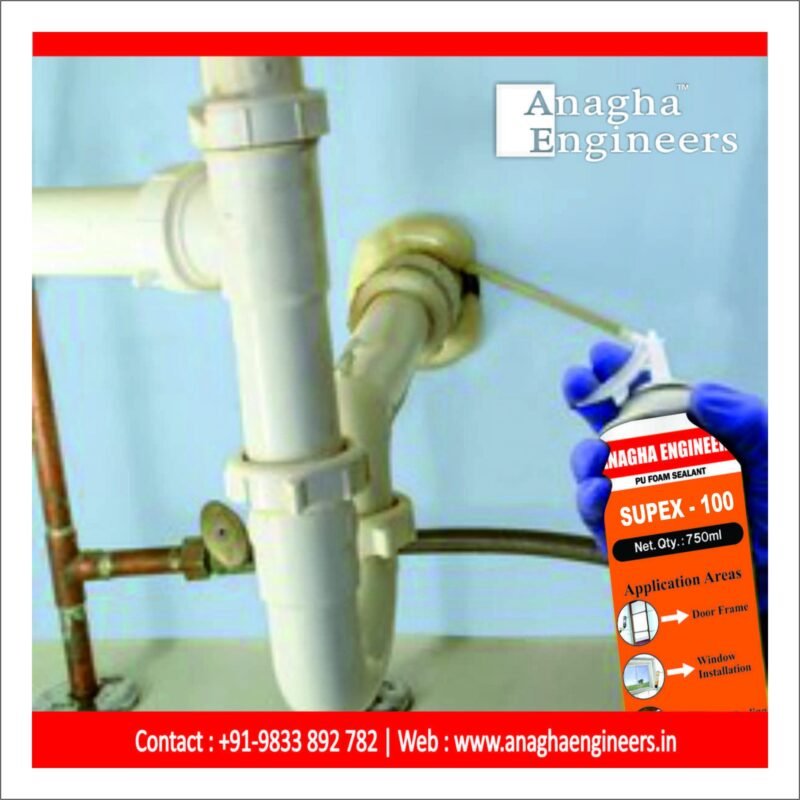
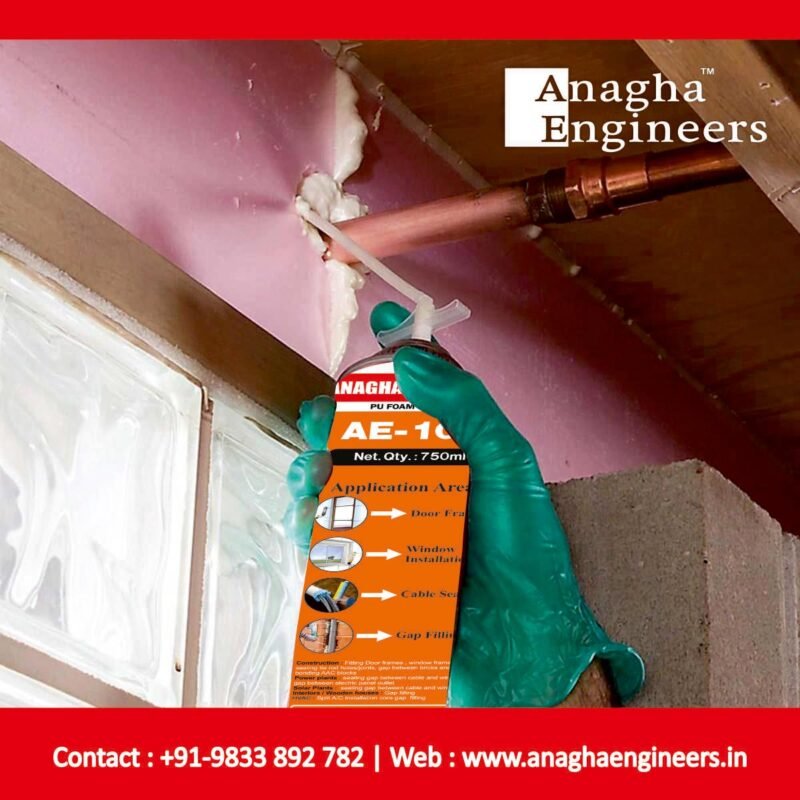
Cable and Pipe Penetrations
Cables and pipes often pass through walls, ceilings, and insulated areas.
These openings can interrupt the insulation layer.
Suitable PU foam can be used to fill some penetrations and reduce unwanted air movement.
For electrical and fire-rated applications, always use a product approved for the specific requirement.
PU Spray Foam Insulation for Construction
Construction projects often contain hundreds of small openings and joints.
These may occur around:
Windows
Doors
Pipes
Cables
HVAC systems
Roof panels
Wall joints
Ceiling openings
Insulation panels
Service penetrations
These small openings can reduce the performance of an insulation system.
Using a suitable PU foam can help close these gaps and create a more continuous sealed layer.
Supex 100 PU Foam is available in different variants for construction and industrial applications. See the Supex PU Foam range.
PU Foam Insulation vs Traditional Filling Materials
Traditional materials such as cement, mortar, and putty have their own applications.
However, they may not be ideal for every insulation gap.
| Material | Typical use |
|---|---|
| PU spray foam | Irregular gaps, cavities and insulation-related sealing |
| Cement/mortar | Rigid masonry and construction work |
| Putty | Surface finishing |
| Rigid insulation boards | Large, planned insulation areas |
| Sealant | Joints requiring surface sealing and flexibility |
PU foam is especially useful where the opening is irregular or difficult to reach.
PU Spray Foam Insulation vs PU Foam Sealant
PU foam can be used for both insulation and sealing, but these are not exactly the same intent.
PU spray foam insulation
The main purpose is to reduce heat transfer and improve the insulation of a building or component.
Typical applications include:
Roof areas
HVAC systems
Pipe insulation
Insulation panel joints
Wall and ceiling cavities
Thermal bridges and openings
PU foam sealant
The main purpose is to close gaps and openings.
Typical applications include:
Door frames
Window frames
Pipe penetrations
Cable openings
Construction gaps
Joints and cavities
Some products can perform both functions.
However, not every PU foam product is suitable for every insulation application.
Always check the technical data sheet and the intended use.
Thermal Insulation and Energy Efficiency
Good insulation helps control the movement of heat.
In a hot climate, insulation can help reduce heat entering an indoor space. In a cold climate, it can help reduce heat escaping from a heated space.
This can reduce the workload on heating and cooling systems.
However, insulation is only one part of building energy performance.
Results also depend on:
Building design
Wall and roof construction
Windows and doors
Air leakage
Insulation thickness
Climate
HVAC efficiency
Installation quality
For this reason, PU foam should be viewed as part of an overall insulation system rather than a single solution for every building.
How to Apply PU Spray Foam Insulation
Application depends on the product and the type of work.
For a typical one-component PU foam application:
Step 1: Clean the surface
Remove dust, dirt, grease, and loose material.
The surface should be strong and suitable for adhesion.
Step 2: Check the gap
Identify the depth and size of the opening.
Do not assume that more foam means better insulation.
Step 3: Lightly moisten the surface
Many one-component PU foams use moisture during curing.
Lightly dampening the surface can support proper curing, depending on the product instructions. Avoid leaving standing water on the surface.
Step 4: Apply the foam
Apply the foam according to the manufacturer’s instructions.
Do not completely fill a cavity if the product is designed to expand significantly.
Step 5: Allow the foam to cure
Curing time depends on temperature, humidity, application thickness, and the product.
Step 6: Trim excess foam
After curing, excess foam can usually be cut away.
Step 7: Protect the cured foam
PU foam should not be left exposed to direct sunlight for long periods.
Cover it with a suitable protective coating, sealant, plaster, or other compatible material where required.
What Surfaces Can PU Foam Be Used On?
Suitable PU foam can bond to many common construction materials, including:
Concrete
Brick
Plaster
Wood
Metal
However, compatibility varies between products.
Some low-energy surfaces, such as polyethylene, polypropylene, silicone, and Teflon, may not provide good adhesion. Always check the manufacturer’s instructions before application.
Important Limitations of PU Spray Foam Insulation
PU foam is useful, but it is not a universal insulation solution.
Keep these points in mind:
It should not be exposed to direct UV light.
The correct foam must be selected for the application.
Large insulation projects may require a dedicated insulation system.
Fire-rated applications require suitable certified products.
Surface preparation affects adhesion and curing.
Foam expansion must be considered during application.
Safety equipment should be used during application.
Supex notes that its PU foam products include FR and non-FR variants. The correct variant should be selected based on the application and required fire performance.
Safety When Using PU Spray Foam
Follow the product safety instructions before application.
Wear:
Safety glasses
Suitable gloves
Protective clothing
Keep the product away from heat and ignition sources during application.
Avoid skin and eye contact.
Use adequate ventilation and follow the manufacturer’s Safety Data Sheet (SDS).
Choosing the Right PU Spray Foam Insulation
Before choosing a product, ask these questions:
What am I insulating?
A roof, pipe, wall cavity, window frame, and cold-storage system may require different solutions.
How large is the area?
A small cavity can be treated differently from a complete insulation system.
Is the foam exposed to sunlight?
If yes, the cured foam will need suitable protection.
Is fire resistance required?
Choose an appropriate fire-rated product where required.
Is thermal insulation the main goal?
Check the product’s technical information for the relevant insulation properties.
Is the foam also being used for sealing?
If both insulation and sealing are required, choose a product designed for both purposes.
Supex PU Spray Foam Solutions
Supex offers PU foam products for construction, sealing, gap filling, and insulation-related applications.
For suitable products, explore the Supex PU Foam Sealant range.
For a specific product, see Supex 100 Expanding PU Foam Sealant.
You can also read our guides on gap filling and PU foam sealant applications.
Frequently Asked Questions
What is PU spray foam insulation?
PU spray foam insulation is polyurethane foam that expands and cures to form a lightweight insulating material. It can help reduce heat transfer and air leakage in suitable applications.
Is PU foam good for insulation?
Yes. Suitable PU foam can provide thermal insulation and air sealing. Its performance depends on the foam type, density, thickness, installation, and application.
Where can PU spray foam be used?
It can be used in suitable applications around roofs, walls, ceilings, windows, doors, pipes, HVAC systems, insulation panels, and service penetrations.
Does PU foam reduce heat?
PU foam can help reduce heat transfer because the cured foam has insulating properties. The amount of heat reduction depends on the product and the thickness and quality of the installed insulation.
Can PU foam be used for roof insulation?
PU foam can be used for suitable roof insulation and gap-sealing applications. However, exposed foam must be protected from UV light, and large roof insulation projects may require a dedicated insulation system.
Is PU foam waterproof?
Cured PU foam can help resist moisture in suitable applications, but it should not automatically be treated as a complete waterproofing system. Water resistance depends on the product, surface, foam structure, and installation.
Is PU foam fireproof?
No foam should be described as completely fireproof. Fire-retardant PU foam products are available for applications where the required fire performance has been specified.
Can PU foam replace insulation boards?
Not always. PU foam is excellent for filling irregular spaces and sealing gaps, but large insulation projects may require insulation boards, spray systems, or another purpose-designed insulation system.
Conclusion
PU spray foam insulation can help improve thermal performance by filling gaps, cavities, and openings where heat and air can move through.
It is especially useful for irregular spaces around windows, doors, pipes, HVAC systems, roofs, walls, and other construction components.
The key is to choose the right product for the job.
For small gaps and penetrations, PU foam can provide both filling and insulation. For larger projects, it should be considered as part of a complete insulation system.
Choose the product based on the required thermal performance, application, surface, fire requirements, exposure, and installation conditions.

Insulating electric boxes with pu spray foam sealant
Most electrical boxes in India 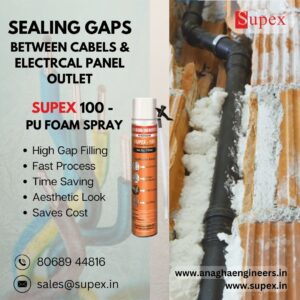 are highly unsafe. Why? Because there is rarely any insulation around it. But what can you do about it? Add some padding behind it using the expanding PU foam. Please use a fire-retardant PU foam spray sealant for this use, however. In Solar projects It is mandatory to seal cable penetrations with Pu foam .
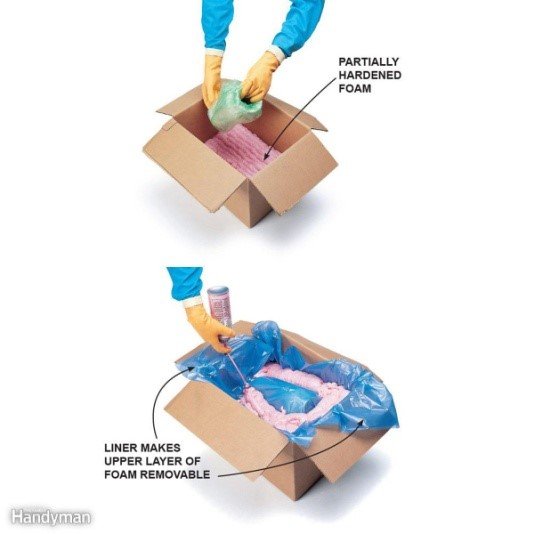
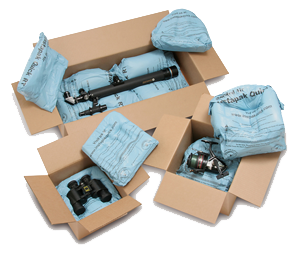
Securing fragile compenents in a Box for transportation with gap filling PU foam
We previously wrote an article about how we solved a fragile box being transported from getting damaged due to the lack of innovation. Check it out here. It is always best when you are not dependent on them to get across your shipment in one piece. But where does PU spray foam insulation sealant fit in the picture? It’s simple, simple encase your material using the expanding properties of the foam!
First, line the box with plastic and fill it up to a third with the foam. Wait for some time so that the foam begins to stiffen just enough to support the material for transport. Line it again with plastic and then set the content inside the box carefully. Use on more plastic layer to cover the material. This allows the foam to separate into two pieces so that you do not face difficulty in removing your content. Remember, you do not need to fill more expansion PU foam spray on the top of the material. This product is expanding and will suitably take care of the content from careless dropping, carrying and transporte

QuickFixing your showerhead wth polyurethane spray foam insulation sealant
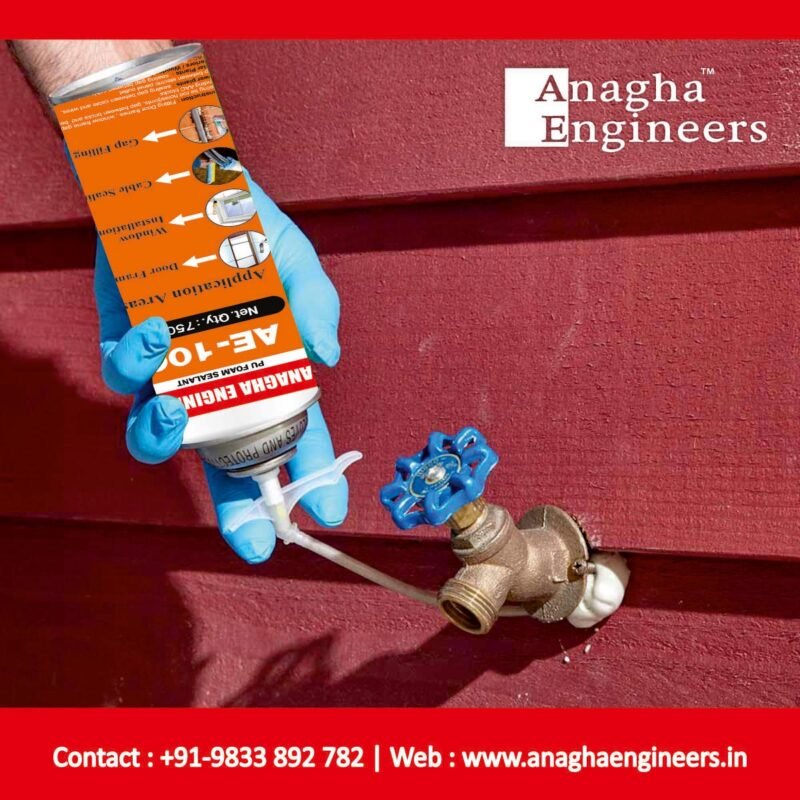
The daily shower is the best ritual to freshen yourself up, any time of the day. But a wobbly showerhead can turn this ritual into a slightly annoying one. But here, we show you how to use a sealant to fix up this small problem.
All you have to do is clean the surface of the shower arm and then apply a little PU foam spray sealant around it. Wait for it to cure. Now this shower arm will not move anywhere. Carve off any excess polyurethane foam sealant that may develop after the expansion. Now slide the cover plate to the wall. It’s as simple as that!
This same trick can also be employed to fix up wobbly pipes around your homes.
Sealing Split AC Core cut holes with PU foam spray sealant
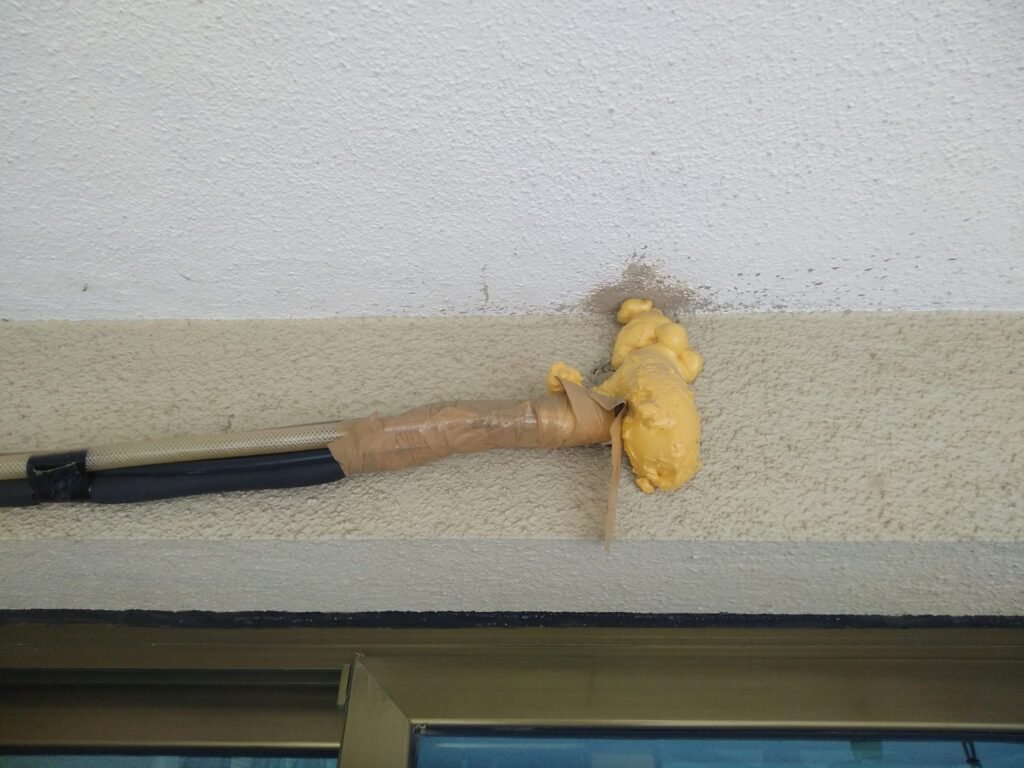
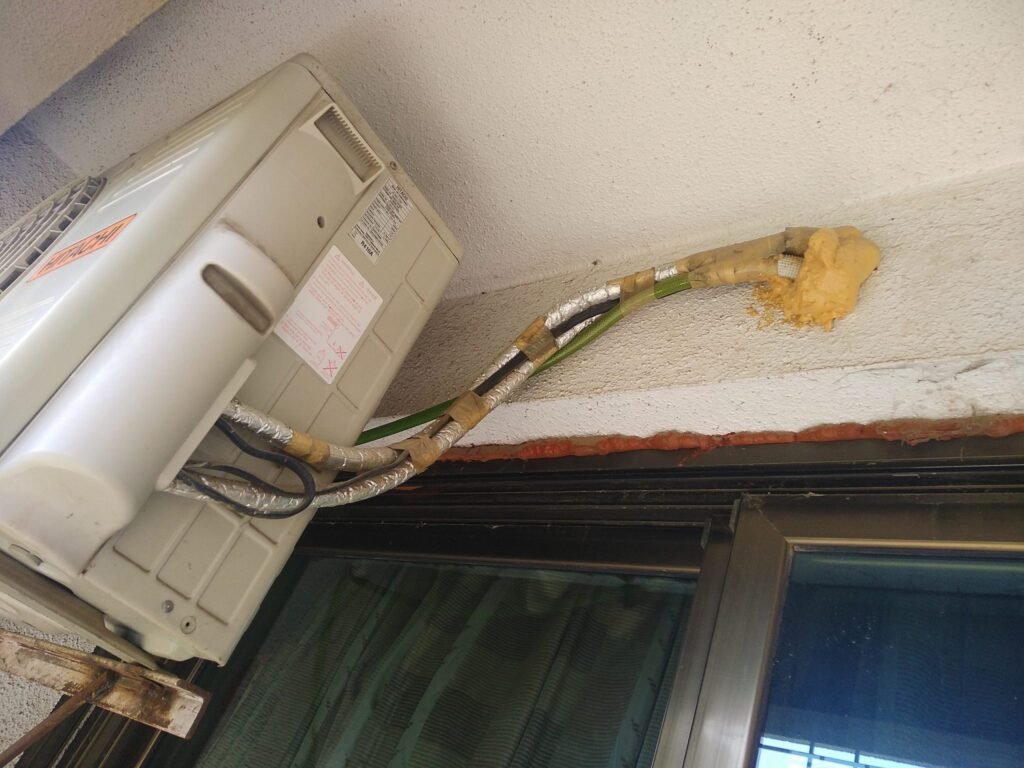
Builders nowadays make core cut holes for cable,pipes of split ac inside room to be connected with compresssor machine placed outside. However, the challenge is to seal the core cut holes through with the cables/pipes pass through.
As usual the traditional methods include stuffing solid thermocol, cement with mortar, caulking sealants( without can’t fill such high gaps).
Sealing such holes with Pu spray foam insulation sealant is gaining popularity with reputed developers. As this technique becomes popular, regular mechanics will also make this can a part of their tool kit.
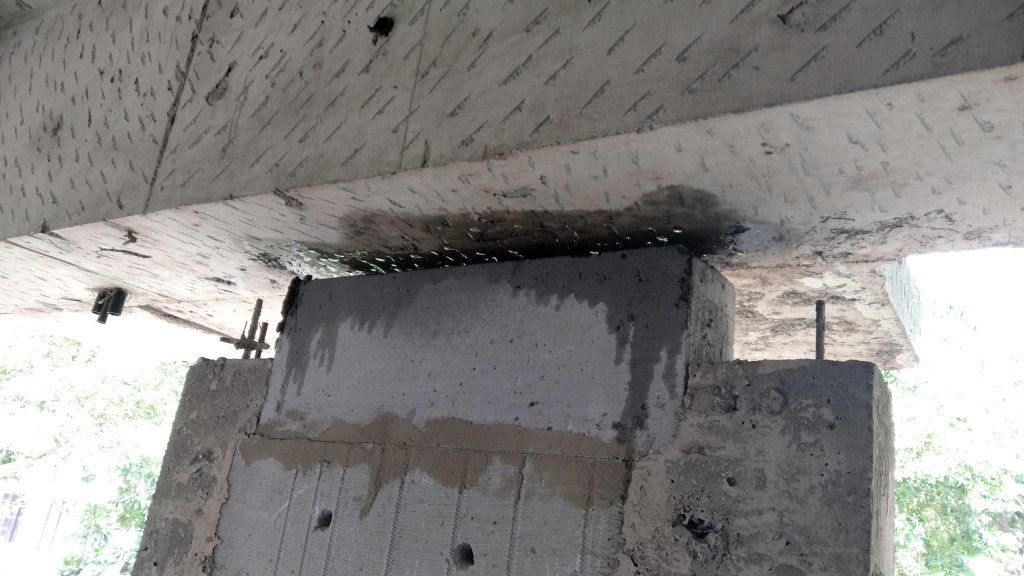
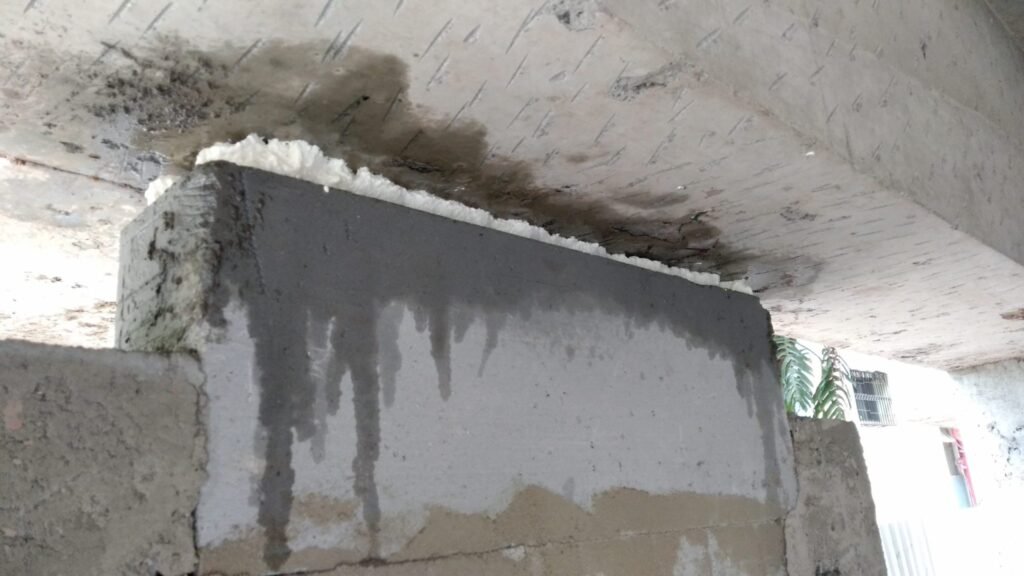
Sealing Isolation/ Transition Joints with Polyurethane foam – between beam and aac blocks.
PU SPRAY FOAM INSULATION SEALAN T – 1 component PU, packed in 750 ml can. Applied using a gun.
When extruded to fill the gaps/ cracks formed, Supex 100 Gun grade PU foam spray sealant expands to fill the gap effectively and seal the joint. Initially in liquid form, the expansion foam sealant cures upon expansion into a flexible material which can compress and decompress like foam.
The property to expand and contract is a highly desirable one. The joints can now offer a higher coefficient of linear expansion than that is shown by the rigid mortar technique. This, in turn, further reduces the probability of Beam- wall joint to crack. Another desirable property of the polyurethane foam sealant is that it also provides acoustical, thermal insulation.
Depending upon the requirements of the construction to be made, Supex 100 PU Foam is available in FR and non-FR variant
Few More applications of PU foam
- insulation of chiller pipes in HVAC system
- Sealing of all Openings in Roof construction, especially metal roof
- Fire & Smoke Retardent sealant between wall, Floor and Ceilings
- Filling free spaces, cracks, gaps, pipe peneratations
- Back up material to Expansion joints
- Model making, design patterns etc
One Response
Required PU foam sealant spray 750ml – Qty – 150 Nos.