
What Are Construction Adhesives?
Construction adhesives are specialized bonding agents used in the construction industry to join, seal, and secure materials together. These adhesives are designed to provide strong, durable bonds between various surfaces such as wood, metal, concrete, drywall, tiles, and other building materials. They are typically used in lieu of nails, screws, or bolts, especially for tasks that require flexibility, moisture resistance, or the ability to bond uneven surfaces
Key Benefits of Construction Adhesives
Construction adhesives improve installation speed, bonding strength, and finishing quality across modern construction projects.
Key benefits include:
Strong and Reliable Bonding
Construction adhesives provide high-strength bonding across materials such as concrete, wood, metal, tiles, and decorative panels. This ensures durable and long-lasting performance in interior and exterior applications.
Faster Installation
Adhesives reduce the need for drilling, nailing, or screwing, allowing faster installation and improved productivity. This helps contractors complete projects efficiently and reduce labour time.
Reduced Need for Screws and Nails
Nail-free construction adhesives minimize visible fasteners and surface damage. This improves finishing quality and creates clean, professional installations.
Moisture and Weather Resistance
Many construction adhesives offer excellent resistance to moisture and humidity, making them suitable for wet areas and exterior applications.
Flexible Bonding Performance
Flexible adhesives accommodate minor movement and expansion, helping maintain strong bonding over time.
Clean and Professional Finish
Using adhesives instead of mechanical fasteners improves surface appearance and enhances the overall quality of decorative installations.
Cost-Effective Installation
Construction adhesives reduce labour, material usage, and installation time, making them a cost-effective solution for contractors.
Suitable for Multiple Materials
Construction adhesives bond a wide range of materials including concrete, wood, metal, tiles, stone, PVC, and laminates, making them suitable for multiple construction applications.
Applications of Construction Adhesives
Construction adhesives are widely used in residential, commercial, and industrial projects for strong, fast, and reliable bonding across multiple materials.
Panel Bonding Applications
Construction adhesives are commonly used for fixing decorative and structural panels to walls and surfaces.
Typical uses:
- ACP panel installation
- UV sheet bonding
- PVC panel installation
- Decorative wall panels
- Laminates and composite panels
- Wall cladding systems
These adhesives provide strong bonding with flexibility to handle minor panel movement.
Tile and Stone Bonding
Construction adhesives ensure secure fixing of tiles and stone materials with long-term durability.
Typical uses:
- Tile installation
- Marble bonding
- Granite installation
- Stone panel fixing
- Skirting installation
- Bathroom tile bonding
High-strength bonding helps prevent tile loosening and improves installation reliability.
Interior Installation Applications
Construction adhesives are widely used in interior finishing where clean installation is required.
Common uses:
- Mirror fixing
- Skirting board installation
- Decorative molding
- False ceiling installation
- Furniture assembly
- Cabinet installation
Adhesives reduce visible fasteners and improve finishing quality.
Structural Bonding Applications
Heavy-duty construction adhesives are used for strong structural bonding in demanding environments.
Typical uses:
- Wood-to-concrete bonding
- Metal-to-concrete bonding
- Structural panel bonding
- Industrial assembly
- Flooring installations
- Subfloor bonding
These applications require high-strength, durable bonding performance.
Bonding Polygranite / Marble / UV Sheets to Walls
Traditional Method
Traditionally, laminate sheets are bonded to walls or wood using HeatX synthetic rubber adhesive. First, workers spread the adhesive over the laminate surface using a small metal sheet. Then, they press the laminate directly onto the wall. However, HeatX costs about Rs. 450 per litre. As a result, the application cost per unit area becomes very high.
Supex Bonding Method
In contrast, the Supex method offers a smarter and more cost-effective solution. First, clean the laminate bonding surface and remove dust or loose particles. Next, clean the wall or wooden surface thoroughly.
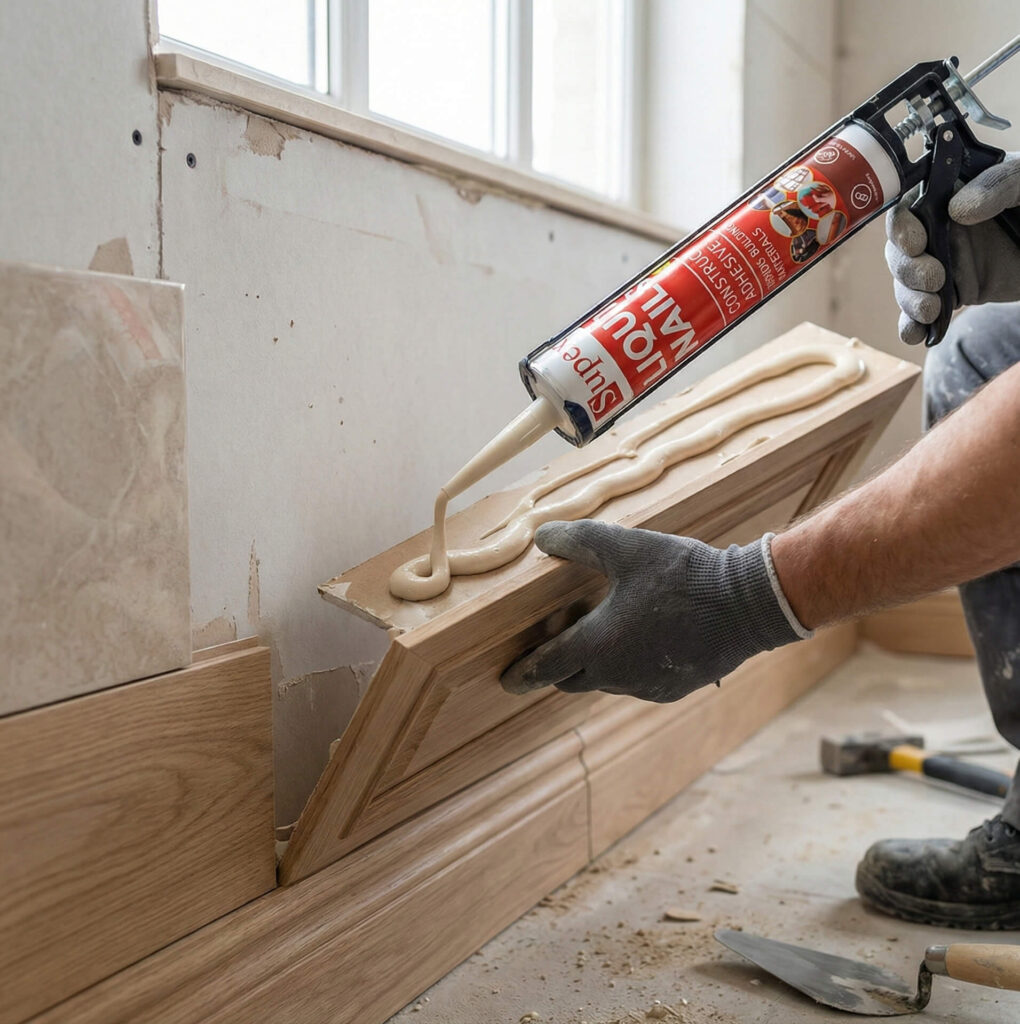
Then, load Supex Nail Free Adhesive into a sealant gun. Apply it evenly over the laminate panel. This adhesive provides much stronger long-term bonding than HeatX rubber adhesive.
For faster initial grip, use high-strength tape to hold the panels in place until the adhesive cures. Since high-strength tape costs less than rubber adhesive, this step further reduces overall cost.
In this method, Supex Nail Free Adhesive delivers the main bonding strength. Meanwhile, applying a small amount of HeatX rubber adhesive along the edges ensures quick grab strength. This combined approach improves performance while lowering total expenses.
Benefits / Advantages of using Supex method
- Supex Nail Free Adhesive is half the price in comparison to Rubber Adhesives like HeatX, direct cost reduction of adhesive per application by 50%.
- Permanent bonding: Higher strength of Supex Liquid Nail / no nail / nail free adhesive VS traditional rubber adhesives.
- High solvent content of rubber adhesives- high odour, harmful for users, fire hazard.
- Easy application with a sealant gun, rubber adhesive from tin container is messy.
Explore top-quality construction adhesives for strong, durable, and long-lasting bonds.
Uses of Supex Liquid Nails adhesive
- ACP Sheets bonding and gap filling.
- Mirror Bonding
- Interior Designing for bonding of décor accessories.
- Wall Building in place of Concrete.
- Tiles Bonding
- Wooden Flooring for bonding wooden planks to floor.
- Pigeon Case Bonding
How do you remove nail-free construction glue?
You can remove construction adhesive in a few simple ways. Sometimes, you only need to wipe off excess glue. Other times, you may need to separate bonded materials like wood, bricks, or boards. First, soften the adhesive. Most glues scrape off easily once softened. You can also use an electric heat gun or a blow dryer. Apply gentle heat, then carefully separate the surfaces while the adhesive is warm.
Will nail-free glue stick to metal?
Yes, nail-free glue sticks well to metal. Liquid Nails is a strong construction adhesive made from a latex compound. It offers excellent strength and durability. In addition, it works on wood, metal, concrete, and ceramic tiles. Therefore, it is more versatile than many polyurethane adhesives.
What is nail-free glue best for?
Nail-free glue works best for permanent bonding. It is ideal for tiles, baseboards, drywall, backsplashes, and crown molding. It also suits most DIY projects that require strong adhesion. For example, drywall adhesive versions help fix nail pops or join drywall pieces.
Can Liquid Nails replace wood glue?
It depends on the job. Use wood glue when bonding two tight-fitting wood pieces. However, choose Liquid Nails for mixed materials or loose joints. It performs better when gaps exist between surfaces.
Types of Construction Adhesives
Construction adhesives come in different types. Each type serves a specific purpose.
Polyurethane Construction Adhesives
These adhesives are very strong and flexible. They bond well even on uneven surfaces. They also resist moisture and temperature changes. As a result, they work well on wood, concrete, metal, stone, and tiles.
Example: Supex 7150
Silicone Adhesives
Silicone adhesives are waterproof and flexible. They also resist UV rays. Therefore, they suit outdoor and wet areas. Common uses include sealing windows, doors, and joints in kitchens and bathrooms.
Example: Supex RTV Silicone
Acrylic Adhesives
Acrylic adhesives dry fast and create a clean finish. They offer strong bonding across many materials. You can use them on wood, metal, drywall, plastic, and concrete.
Example: Supex Liquid Nails Heavy Duty Construction Adhesive
Butyl Rubber Adhesives
These adhesives perform well in high-movement areas. They handle vibration and extreme conditions. Because of this, they suit roofing, plumbing, and HVAC systems.
Epoxy-Based Adhesives
Epoxy adhesives come in two parts. When mixed, they deliver very high strength. They also resist harsh conditions. Use them for metal, concrete, and stone in demanding projects.
Hot Melt Adhesives
Hot melt adhesives set quickly. People use them with hot glue guns. They work for woodworking, crafts, and light sealing tasks.
Contact Cement
Contact cement creates a strong, permanent bond. You apply it to both surfaces before joining them. It works best on smooth, non-porous materials like laminates, tiles, and rubber.
One Response
I need one of supex