
Best Glue for Metal to Metal: How to Choose the Right Adhesive
Need to bond two metal surfaces without welding, drilling, or using screws? The best glue for metal to metal can create a strong, durable joint while keeping the finish clean and reducing assembly steps.
But not every metal adhesive delivers the same results. Some provide high structural strength, while others are better for vibration, flexible joints, or outdoor exposure.
For example, an adhesive used to attach a metal nameplate may not be suitable for a load-bearing steel assembly. Choosing the wrong product can lead to bond failure, rework, and higher maintenance costs.
This guide compares the main types of metal adhesives, explains how to select the right one, and highlights Supex products for different bonding needs.
What Is Metal-to-Metal Adhesive?
Metal-to-metal adhesive is a glue designed to join two metal surfaces. Depending on the formulation, it can bond materials such as steel, stainless steel, aluminium, and other compatible metals.
Industrial metal adhesives are used in:
Sheet-metal fabrication
Automotive and transport components
Machinery and equipment assembly
Metal nameplates and labels
Electrical enclosures
Construction and industrial panels
Metal components exposed to vibration
Compared with welding or mechanical fastening, adhesive bonding can reduce heat damage, avoid drilling holes, and spread loads across a larger bonding area.
However, the right choice depends on the joint design, load, metal finish, temperature, and operating environment.
Which Is the Best Glue for Metal to Metal?
The best adhesive depends on what you need the joint to do.
For high-strength structural bonding: Consider a structural MMA adhesive or a suitable epoxy.
For impact and vibration: Consider a toughened structural MMA adhesive.
For flexible metal joints: Consider polyurethane adhesive.
For outdoor sealing and weather exposure: Consider a suitable MS polymer adhesive.
For small, close-fitting metal parts: Consider a specialised instant adhesive or anaerobic product, depending on the application.
For industrial metal bonding, Supex offers options such as Supex 3090 MMA Adhesive and Supex M419 Structural Adhesive.
The sections below explain how these options compare.
Metal Adhesive Comparison: Which Type Should You Choose?
Use this table to narrow down your options before selecting a product.
| Adhesive type | Main advantage | Best suited for | Key limitation |
|---|---|---|---|
| Structural MMA | High strength with good toughness | Industrial assemblies and metal fabrication | Requires correct mixing and application |
| Epoxy | High strength and rigid bonding | Rigid joints and applications needing chemical resistance | Some formulations cure slowly and resist movement poorly |
| Polyurethane (PU) | Flexibility and shock absorption | Panels, sheet metal, and assemblies exposed to vibration | Usually offers less rigidity than structural epoxy |
| MS polymer | Flexible bonding and weather resistance | Outdoor joints and mixed-material bonding | Not intended for every high-load structural joint |
| Instant adhesive | Very fast setting | Small parts and light-duty applications | Often brittle and unsuitable for demanding structural loads |
| Anaerobic adhesive | Reliable curing in confined metal joints | Threadlocking, retaining, and flange sealing | Requires suitable close-fitting joint geometry |
Quick buying tip: For demanding industrial metal-to-metal bonding, start by comparing structural MMA and epoxy adhesives. If the joint must flex or seal against weather, evaluate PU or MS polymer products instead.
Always compare the technical data for the exact product. Adhesives within the same category can perform very differently.
Best Supex Adhesives for Metal-to-Metal Bonding
Supex offers several adhesive types for industrial and commercial bonding. Here are three options to evaluate based on your requirements.
1. Supex 3090 MMA Adhesive — For Strong Structural Metal Bonding
Best for: Metal fabrication, industrial assembly, and joints that need strength with impact resistance.
Supex 3090 is a two-component methyl methacrylate (MMA) structural adhesive. It is designed for demanding bonding applications involving compatible metals and other materials.
Why consider it?
Provides structural bonding strength.
Offers toughness to help resist impact and vibration.
Supports bonding across different material combinations.
Can reduce the need for welding or mechanical fasteners in suitable designs.
Supports industrial assembly where joint performance and durability matter.
MMA adhesives are worth evaluating when a rigid but brittle bond may not handle the loads or vibration in your application.
Explore the product: Supex 3090 MMA Adhesive
2. Supex M419 Structural Adhesive — For Demanding Industrial Applications
Best for: High-strength metal bonding in industrial equipment, automotive components, and other demanding assemblies.
Supex M419 is a two-component structural methacrylate adhesive developed for strong, durable bonds between compatible metals and other engineered materials.
Key reasons to consider it include:
High-strength structural bonding
Resistance to impact and mechanical stress
Suitability for industrial assembly
An alternative to mechanical fastening in suitable designs
Choose between M419 and 3090 by comparing their strength, working time, gap-filling capability, substrate compatibility, and curing requirements against your application.
Explore the product: Supex M419 Structural Adhesive
3. Supex E 30CL Structural Epoxy — For Rigid, High-Strength Bonds
Best for: Suitable rigid bonding applications where strength and chemical resistance are important.
Epoxy adhesives are often used when a joint needs high strength and limited movement. They can work well for rigid assemblies when the metal surfaces are correctly prepared and the adhesive is matched to the service conditions.
Before choosing an epoxy, check its resistance to operating temperatures, chemicals, moisture, and sustained loads.
Epoxy is not automatically the best choice for joints exposed to repeated impact or movement. A toughened MMA formulation may be more suitable in those cases.
Explore options: Supex Bonding Adhesives
Need a Flexible Metal Bond?
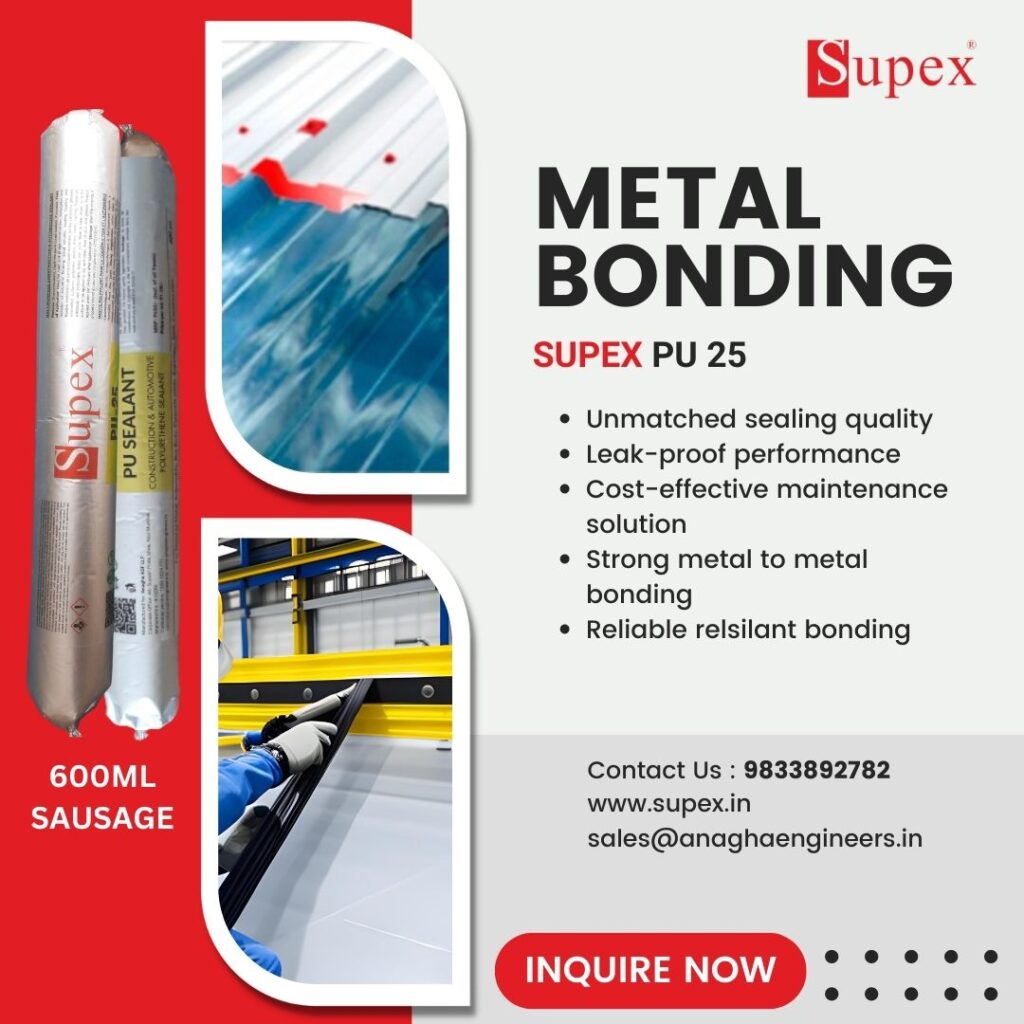
For sheet-metal panels, outdoor assemblies, and joints that need flexibility, consider a suitable polyurethane or MS polymer adhesive.
Supex 7221 Polyurethane Adhesive — evaluate for compatible applications requiring flexible bonding.
Supex 600 MS Polymer Adhesive — evaluate for compatible joints requiring flexible bonding and weather resistance.
These products are not direct replacements for structural MMA or epoxy. Select them according to the joint’s load, movement, and environmental exposure.
Supex 3090 vs M419 vs Epoxy: How Do You Choose?
If you are comparing structural adhesives for industrial use, focus on the demands of your assembly rather than choosing by the product name alone.
| Selection factor | Supex 3090 MMA | Supex M419 | Structural epoxy |
|---|---|---|---|
| Main consideration | Strength and toughness | Strength and fast fixturing requirements | Rigid bonding and chemical resistance |
| Impact and vibration | Evaluate for demanding joints | Evaluate against application loads | Depends on formulation and toughness |
| Assembly speed | Check working and fixture times | Check working and fixture times | Often requires longer curing |
| Gap filling | Check product specifications | Check product specifications | Depends on formulation |
| Best next step | Review the 3090 technical data | Review the M419 technical data | Select an epoxy grade for the service conditions |
There is no universal winner. The correct product depends on the metal type, bond-line thickness, joint geometry, load direction, production speed, and service environment.
For a high-load assembly, ask the supplier for the relevant lap-shear, tensile, peel, impact, and temperature data rather than relying on a general claim of high strength.
How to Bond Metal to Metal Without Welding
Correct surface preparation and application are essential for a durable bond.
Step 1: Identify the Metals
Determine whether you are bonding mild steel, stainless steel, aluminium, galvanised steel, or coated metal.
Different metals and surface treatments can affect adhesion. Painted and powder-coated surfaces need special attention because the adhesive may bond to the coating rather than the underlying metal.
Step 2: Clean the Surfaces
Remove oil, grease, dust, moisture, and other contaminants using a suitable cleaning method.
Even small amounts of contamination can weaken the joint. Follow the adhesive manufacturer’s recommended cleaning procedure.
Step 3: Prepare the Surface
Some adhesives perform better on lightly abraded metal. Others may allow less surface preparation.
If abrasion is recommended, use a suitable method and remove the resulting dust. Do not damage protective coatings unless the bonding procedure specifically requires it.
Step 4: Apply the Adhesive
For two-component products, follow the specified mixing ratio and use the recommended dispensing equipment.
Apply the correct quantity to achieve the required bond-line thickness. Avoid trapping air or leaving unbonded areas.
Step 5: Align and Secure the Parts
Position the components within the adhesive’s working time. Use clamps or fixtures if required, without applying excessive pressure that squeezes out too much adhesive.
Step 6: Allow the Bond to Cure
Keep the assembly undisturbed for the recommended period.
Initial fixture time and full cure time are different. Do not place the joint under its intended service load until the adhesive has reached the required strength.
How to Choose the Right Metal Glue for Your Application
Before purchasing an adhesive, answer these five questions.
1. How much load will the joint carry?
Light-duty attachments may need a different adhesive from structural assemblies. Consider tensile, shear, peel, and impact loads.
2. Will the joint experience vibration?
Moving machinery and vehicle components can place repeated stress on a bond. A toughened adhesive may be more suitable than a rigid, brittle formulation.
3. What temperatures will the adhesive face?
Check both the minimum and maximum operating temperatures. Also consider thermal cycling and differences in expansion between the two metals.
4. Will the joint contact water or chemicals?
Outdoor exposure, humidity, cleaning agents, oils, and process chemicals can affect adhesive performance. Confirm compatibility with the actual service conditions.
5. How quickly must production move?
Compare working time, fixture time, full cure time, dispensing requirements, and labour costs. A fast-setting adhesive may improve output, provided it gives enough time for accurate assembly.
Common Metal Bonding Mistakes to Avoid
Avoid these mistakes when bonding metal surfaces:
Choosing by strength alone: A very rigid adhesive may not handle impact or repeated movement well.
Ignoring surface coatings: Paint and powder coating can become the weakest part of the joint.
Skipping surface cleaning: Oil and dust can reduce adhesion.
Using the wrong mixing ratio: Two-component adhesives must be mixed as directed.
Applying excessive pressure: This can leave too little adhesive in the joint.
Loading the joint too early: Handling strength does not always mean the adhesive has fully cured.
Skipping testing: Critical assemblies should be validated under representative operating conditions.
For safety-critical or load-bearing components, adhesive bonding should be validated through an appropriate engineering assessment. Do not replace welding or mechanical fasteners without confirming that the bonded joint meets the design requirements.

Frequently Asked Questions
1. What is the best glue for metal to metal?
Structural MMA adhesives and epoxies are common choices for high-strength metal bonding. MMA is worth considering when impact resistance and toughness matter, while epoxy may suit rigid joints requiring high strength and chemical resistance. The best choice depends on the application.
2. Which Supex adhesive is best for metal-to-metal bonding?
Supex 3090 and Supex M419 are structural MMA adhesives to consider for demanding metal bonding. Compare their technical data against your substrate, load, curing time, and environmental requirements.
3. Can I bond metal without welding?
Yes. A suitable structural adhesive can join metal components without the heat of welding. Correct joint design, surface preparation, and curing are essential for reliable performance.
4. Is epoxy stronger than metal glue?
Epoxy is itself a type of adhesive, so the comparison depends on the specific products. Some structural epoxies provide high tensile strength, while MMA adhesives may offer a better balance of strength and impact resistance.
5. Can metal adhesive withstand vibration?
Some structural adhesives are designed to withstand impact and vibration. Toughened MMA and suitable flexible adhesives may be good candidates, but the joint must be tested against the actual loads and conditions.
6. What is the strongest glue for steel?
There is no single strongest glue for every steel application. Structural MMA and epoxy adhesives can provide high strength. Surface preparation, steel grade, joint design, bond-line thickness, and load direction all affect the result.
7. How long does metal-to-metal adhesive take to cure?
Curing time varies by formulation, temperature, bond thickness, and mixing conditions. Some adhesives reach handling strength in minutes, while others need several hours or longer to reach full cure. Always follow the product’s technical data sheet.
8. Can adhesive replace screws, rivets, or welding?
In suitable applications, adhesive bonding can replace some mechanical fasteners or welding operations. However, structural and safety-critical joints require engineering validation before a joining method is changed.
9. Where can I buy industrial metal bonding adhesive?
Explore the Supex bonding adhesives range or review individual products such as Supex 3090 MMA Adhesive and Supex M419 Structural Adhesive.
Choose the Right Metal Adhesive for Better Bonding
The best glue for metal to metal is the one that meets your application’s strength, durability, and production needs.
For demanding structural bonding, compare Supex 3090 and M419. For rigid joints, explore suitable epoxy grades. For flexible assemblies and weather-exposed joints, consider compatible PU or MS polymer adhesives.
Before making a final choice, review the technical data, prepare the metal surfaces correctly, and test the bond under realistic conditions.
Need help selecting an industrial metal adhesive? Visit the Supex bonding adhesives range to explore available products and contact the Supex team for application-specific guidance.