
What is Industrial Glue?
Industrial glue (also called industrial adhesive) is a high-strength bonding material designed to permanently join materials like metal, plastic, rubber, glass, wood, and composites in heavy-duty applications. It is widely used in industries where strong, durable, and long-lasting bonds are required instead of mechanical fasteners like screws, bolts, or welding.
High-Performance Industrial Glue by Supex
Supex offers a complete range of high-performance industrial glue and sealants, formulated using epoxy, silicone, and polyurethane technologies. These solutions are engineered to address challenges caused by:
- Wear and abrasion
- Chemical exposure
- Mechanical damage
- Fatigue and vibration
- Erosion and corrosion
Types of Industrial Glues
Here are the most common types of Industrial glue and sealants used in industrial applications:
1. Epoxy Adhesives
- Properties: High strength, excellent chemical resistance, and durability.
- Uses: Bonding metals, plastics, ceramics, and composites; used in construction, electronics, and aerospace.
- Advantages: Heat- and impact-resistant, suitable for structural applications.
2. Polyurethane Adhesives
- Properties: Flexible, waterproof, and resistant to impact and vibration.
- Uses: Automotive, construction, and furniture assembly.
- Advantages: Works well on porous and non-porous materials; good for outdoor applications.
Supex Polyurethane adhesives, know more
3. Cyanoacrylate (Super Glue)
- Properties: Rapid bonding, ideal for small-scale applications.
- Uses: Electronics, medical devices, and repairs in light industries.
- Advantages: Quick-drying, strong adhesion, and works on diverse surfaces.
4. Acrylic Adhesives
- Properties: High strength and fast curing, resistant to environmental factors.
- Uses: Signage, electronics, and automotive industries.
- Advantages: Bonds plastics and metals effectively, UV resistant.
5. Silicone Adhesives and Sealants
- Properties: Flexible, waterproof, and temperature-resistant.
- Uses: Sealing and bonding in HVAC, construction, and automotive applications.
- Advantages: High elasticity, excellent weatherproofing.
Contact Supex technical expert for RTV Silicones.
6. Hot-Melt Adhesives
- Properties: Thermoplastic adhesive that melts at high temperatures.
- Uses: Packaging, furniture, and textiles.
- Advantages: Fast bonding, easy application.
7. UV-Curing Adhesives
- Properties: Cures quickly when exposed to UV light.
- Uses: Electronics, medical devices, and glass bonding.
- Advantages: Precise application and fast setting.
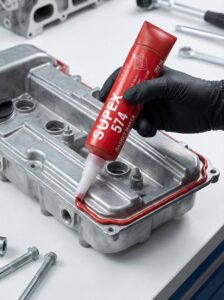
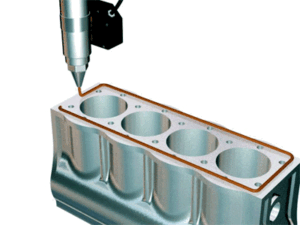
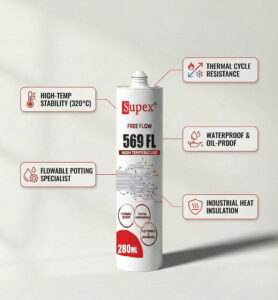
Quick Comparison of Industrial Glue Types
| Type | Strength | Flexibility | Best For |
|---|---|---|---|
| Epoxy | Very High | Low–Medium | Metal bonding |
| Polyurethane | High | High | Wood & flexible joints |
| Silicone | Medium | Very High | Sealing & waterproofing |
| Cyanoacrylate | High | Low | Small components |
| Anaerobic | High | Low | Thread locking |
| Acrylic | High | Medium | Structural bonding |
| Hot Melt | Medium | Medium | Packaging |
| UV Adhesive | High | Low | Glass bonding |
Applications of Industrial Adhesives
Industrial adhesives are used across many industries to bond, seal, repair, and assemble materials such as metal, plastic, rubber, glass, and composites. They help improve product strength, reduce weight, and increase manufacturing efficiency.
Manufacturing & Assembly
Supex adhesives are widely used in manufacturing plants to assemble parts and components.
Common Uses:
- Bonding metal components
- Fixing machine parts
- Assembling appliances
- Securing bearings and shafts
- Thread locking bolts
Typical Materials Bonded:
Metal, plastic, rubber, composites.
Automotive Industry
Adhesives play a major role in vehicle manufacturing and repair, replacing welding and mechanical fasteners in many applications.
Common Uses:
- Body panel bonding
- Interior trim fixing
- Windshield bonding
- Engine component sealing
- Vibration resistance joints
Benefits in Automotive:
- Reduces vehicle weight
- Improves fuel efficiency
- Increases structural strength
Construction Industry
Industrial adhesives are essential for construction and building applications.
Common Uses:
- Tile fixing
- Panel bonding
- Flooring installation
- Waterproof sealing
- Insulation bonding
Typical Materials Bonded:
Concrete, wood, tiles, glass, insulation panels.
Electronics & Electrical Industry
Adhesives are used in electronics manufacturing to ensure safe and reliable connections.
Common Uses:
- Circuit board bonding
- Component encapsulation
- Heat sink attachment
- Wire insulation
- Potting and sealing
Benefits:
- Protects against moisture
- Provides electrical insulation
- Improves product durability
Packaging Industry
Adhesives are essential for high-speed packaging operations.
Common Uses:
- Carton sealing
- Label bonding
- Flexible packaging
- Bookbinding
- Product labeling
Benefits:
- Fast production speed
- Clean application
- Strong packaging seals
Aerospace Industry
High-performance adhesives are used in aircraft and aerospace components.
Common Uses:
- Structural bonding
- Composite material assembly
- Panel bonding
- Lightweight component joining
Benefits:
- Reduces aircraft weight
- Improves fuel efficiency
- Provides high strength
Marine Industry
Supex glue is widely used in marine environments where moisture resistance is essential.
Common Uses:
- Boat assembly
- Deck sealing
- Waterproof bonding
- Hull repairs
Benefits:
- Water resistance
- Corrosion protection
- Durable bonding
Furniture & Woodworking Industry
Adhesives are used in furniture production and wood assembly.
Common Uses:
- Wood panel bonding
- Cabinet assembly
- Laminate bonding
- Veneer fixing
Typical Materials Bonded:
Wood, laminates, MDF boards.
Medical Device Manufacturing
Industrial adhesives are used to produce medical equipment and devices.
Common Uses:
- Device assembly
- Tubing bonding
- Disposable product manufacturing
- Surgical equipment bonding
Benefits:
- Sterile bonding
- High precision
- Chemical resistance
Heavy Machinery & Equipment
Industrial adhesives are used in industrial maintenance and repair.
Common Uses:
- Thread locking
- Gasket sealing
- Shaft fixing
- Bearing retention
- Equipment repair
Benefits:
- Prevents loosening
- Reduces downtime
- Improves reliability
Supex Anaerobic or Machinery adhesives
‘ Anaerobics’ also called machinery glues is preferred by engineers and scientists for holding metal parts together.
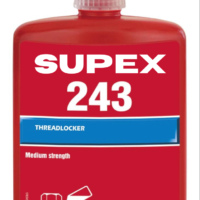
Nut, Bolts, fasteners loosenening
Problem: loosening of fasteners, corrosion of threads- opening also difficult.
Solution: Anaerobic threadlocker
- Fills the gap.
- It cures to SOLID, rigid , thermoplastic polymer.
- Assembly becomes ‘ONE’ !
- Even during vibrations – complete assembly vibrates as one.
- Therefore ‘No relative motion’ in between Nuts & bolts.
Leakage from Hydraulic, pneumatic threaded joints
- Not 100% metal to metal contact
- Damage in the thread
- Weak tightening torque
- Thermal cycle
- Not sufficient sealant
- Vibration, Impact
- Excessive internal pressure
Benefits of Supex thread sealing.
- It gives 100% sealing – Cures to tough thermoset plastic.
- Instant Sealing – 3000 psi.
- Allows adjustability – Positioning is possible
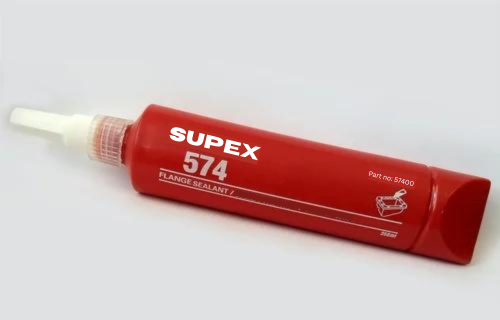
How to seal flanges
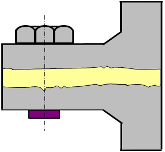
Solution: Use anaerobic liquid gasket sealant for machined flanges, Silicone sealant for sheet metal, casted flanges.
Benefits: 100% leak free assembly, increase in structural strength, inventory of solid gaskets not required- one tube can make all types of gaskets.
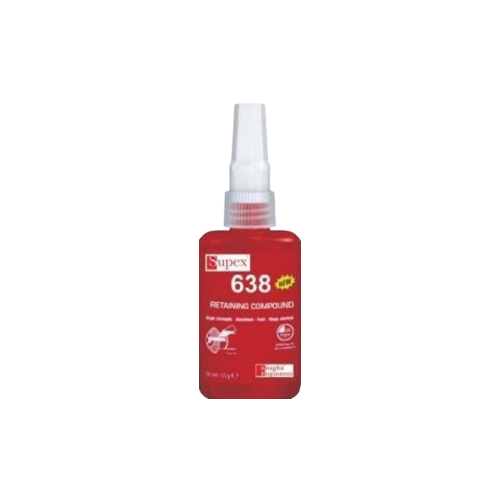
Assembly of cylindrical parts
Anaerobic Retainers – Benefits
- Ease of Assembly
- Insite Application
- 100% Contact
- Eliminates Fretting
- Proven Assembly Method
FAQs About Industrial Adhesives
What is industrial glue used for?
Supex glue is used to bond materials such as metal, plastic, rubber, glass, and wood in manufacturing, construction, automotive, electronics, and heavy machinery applications. It provides strong, durable bonds that can replace screws, bolts, and welding in many industries.
Which industrial adhesive is strongest?
Epoxy adhesives and structural acrylic adhesives are considered among the strongest adhesives. They provide high-strength bonding and are widely used for metal bonding, structural assembly, and heavy-duty industrial applications.
Can industrial adhesives replace welding?
Yes, Supex adhesives can replace welding in certain applications. They reduce heat damage, distribute stress evenly, prevent corrosion, and help bond different materials without mechanical fasteners.
How do I choose the right industrial adhesive?
Please consider:
- Material type (metal, plastic, rubber, wood)
- Required bond strength
- Operating temperature
- Exposure to moisture or chemicals
- Flexibility requirements
- Cure time needed
Selecting the correct adhesive ensures long-lasting performance and safety.
What materials can industrial glue bond?
Industrial glue can bond a wide range of materials, including:
- Metal
- Plastic
- Rubber
- Glass
- Wood
- Ceramics
- Composite materials
Some advanced adhesives can also bond dissimilar materials, such as metal to plastic.
How long does industrial adhesive take to cure?
Curing time depends on the adhesive type:
- Instant adhesives: Seconds
- Epoxy adhesives: Minutes to hours
- Polyurethane adhesives: Several hours
- Silicone adhesives: 24 hours
- UV adhesives: Seconds (with UV light)
Always follow manufacturer instructions for best results.
Are industrial adhesives resistant to heat and chemicals?
Yes, many adhesives are designed to withstand:
- High temperatures
- Chemicals
- Moisture
- Vibration
- Harsh industrial environments
Epoxy and silicone adhesives are especially known for heat and chemical resistance.
What is the difference between industrial glue and regular glue?
Industrial glue is designed for heavy-duty applications and offers higher strength, durability, and resistance compared to regular household glue.
| Feature | Industrial Glue | Regular Glue |
|---|---|---|
| Strength | Very High | Low–Medium |
| Durability | Long-term | Short-term |
| Heat Resistance | High | Low |
| Industrial Use | Yes | No |
Can industrial adhesives be used for metal bonding?
Yes, epoxy and acrylic adhesives are widely used for metal bonding. They provide strong structural bonds and help prevent corrosion and vibration damage.
Are industrial adhesives waterproof?
Many Supex adhesives are waterproof and moisture-resistant. Silicone and polyurethane adhesives are commonly used in applications that require waterproof sealing.
Quick Summary — Why Choose Supex
| Feature | Benefit |
|---|---|
| Precision Formulation | Consistent performance |
| High Strength | Durable long-term bonding |
| Weather Resistance | Reliable outdoor performance |
| Eco-Friendly | Safe and compliant materials |
| Wide Product Range | Suitable for many industries |
| Trusted Brand | Used by professionals nationwide |