Industrial Glue & Sealants for Heavy-Duty Applications
Industrial glue and sealants are advanced bonding solutions designed for demanding applications in manufacturing, construction, automotive, aerospace, and other industrial environments. These adhesives deliver high strength, long-term durability, and resistance to heat, chemicals, pressure, and harsh operating conditions.
High-Performance Industrial Glue by Supex
Supex offers a complete range of high-performance industrial glue and sealants, formulated using epoxy, silicone, and polyurethane technologies. These solutions are engineered to address challenges caused by:
Wear and abrasion
Chemical exposure
Mechanical damage
Fatigue and vibration
Erosion and corrosion
Typical Industrial Applications
Supex industrial glue is commonly used for:
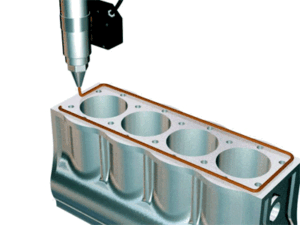
Repairing pipes and engine blocks
Bonding chutes, splines, and fan housings
Adhesion of rubber, aluminum, and stainless steel parts
Preventive maintenance and equipment restoration
Reliable Bonding for Industrial Performance
Designed for reliability and ease of use, Supex industrial glue helps extend equipment life, reduce downtime, and replace traditional repair methods such as welding or mechanical fastening.
Types of Industrial Glues
Here are the most common types of Industrial glue and sealants used in industrial applications:
1. Epoxy Adhesives
- Properties: High strength, excellent chemical resistance, and durability.
- Uses: Bonding metals, plastics, ceramics, and composites; used in construction, electronics, and aerospace.
- Advantages: Heat- and impact-resistant, suitable for structural applications.
2. Polyurethane Adhesives
- Properties: Flexible, waterproof, and resistant to impact and vibration.
- Uses: Automotive, construction, and furniture assembly.
- Advantages: Works well on porous and non-porous materials; good for outdoor applications.
3. Cyanoacrylate (Super Glue)
- Properties: Rapid bonding, ideal for small-scale applications.
- Uses: Electronics, medical devices, and repairs in light industries.
- Advantages: Quick-drying, strong adhesion, and works on diverse surfaces.
4. Acrylic Adhesives
- Properties: High strength and fast curing, resistant to environmental factors.
- Uses: Signage, electronics, and automotive industries.
- Advantages: Bonds plastics and metals effectively, UV resistant.
5. Silicone Adhesives and Sealants
- Properties: Flexible, waterproof, and temperature-resistant.
- Uses: Sealing and bonding in HVAC, construction, and automotive applications.
- Advantages: High elasticity, excellent weatherproofing.
6. Hot-Melt Adhesives
- Properties: Thermoplastic adhesive that melts at high temperatures.
- Uses: Packaging, furniture, and textiles.
- Advantages: Fast bonding, easy application.
7. UV-Curing Adhesives
- Properties: Cures quickly when exposed to UV light.
- Uses: Electronics, medical devices, and glass bonding.
- Advantages: Precise application and fast setting.
Applications of Industrial glue
Industrial glue and sealants are used for various applications, some of the areas are listed below:
Construction:
- Bonding steel, concrete, and wood in structural projects.
- Sealing joints and cracks for waterproofing.
Automotive:
- Attaching body panels, glass, and interior components.
- Used in lightweight bonding for EVs and aerodynamics.
Aerospace:
- High-performance adhesives for composite materials in aircraft.
- Lightweight alternatives to traditional fasteners.
Electronics:
- Circuit board assembly, cable management, and device sealing.
Packaging:
- Carton sealing, labeling, and tamper-evident bonding.
Marine:
- Waterproof and corrosion-resistant adhesives for ships and offshore platforms.
Supex Anaerobic or Machinery adhesives
‘ Anaerobics’ also called machinery glues is preferred by engineers and scientists for holding metal parts together.
Nut, Bolts, fasteners loosenening
Problem: loosening of fasteners, corrosion of threads- opening also difficult.
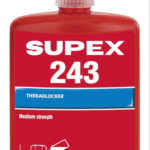
Solution: Anaerobic threadlocker
- Fills the gap.
- It cures to SOLID, rigid , thermoplastic polymer.
- Assembly becomes ‘ONE’ !
- Even during vibrations – complete assembly vibrates as one.
- Therefore ‘No relative motion’ in between Nuts & bolts.
Leakage from Hydraulic, pneumatic threaded joints
- Not 100% metal to metal contact
- Damage in the thread
- Weak tightening torque
- Thermal cycle
- Not sufficient sealant
- Vibration, Impact
- Excessive internal pressure
Benefits of Supex thread sealing.
- It gives 100% sealing – Cures to tough thermoset plastic.
- Instant Sealing – 3000 psi.
- Allows adjustability – Positioning is possible
How to seal flanges
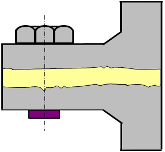
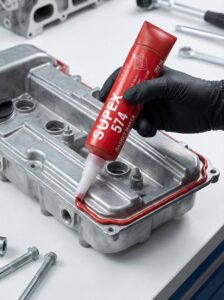
Solution: Use anaerobic liquid gasket sealant for machined flanges, Silicone sealant for sheet metal, casted flanges.
Benefits: 100% leak free assembly, increase in structural strength, inventory of solid gaskets not required- one tube can make all types of gaskets.
Assembly of cylindrical parts
Anaerobic Retainers – Benefits
- Ease of Assembly
- Insite Application
- 100% Contact
- Eliminates Fretting
- Proven Assembly Method
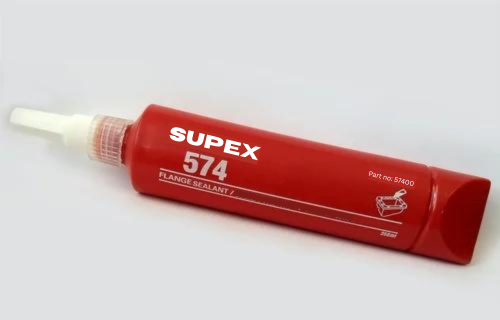
Silicone Sealants
RTV silicone sealants is very popular amongst Industrial glue and sealants. It find uses in alomost all fields, some as enumerated as below:
- Seal flanges, gasketing
- For the sealing between metal parts.
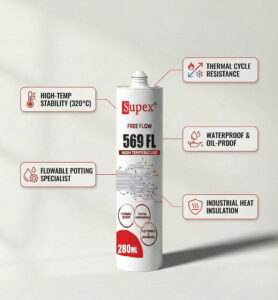
- It is an essential product to use during the creation of gaskets that need to be heat resistant.
- Finds large use in heating systems and kitchen machinery where heat resistant sealing is a very crucial affair.
- Gaskets in pumps and motors also require the use of a heat sealing sealant.
MS industrial glue
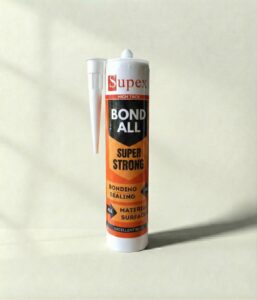
bonding heavy parts instantly, high gap fill- High initial grab & final strength.
- Does not require clamping, nailing or taping.
- Does not stain surfaces or form bubbles during cure.
- Does not corrode metals
- Stays permanently elastic.
- UV & weather resistant.
- No shrinkage
- Can be painted upon after 24 hours.
- Can bond to damp surfaces, seal wet areas and fix underwater leaks.
Uses of MS Industrial glue
- Seam and joint sealing in vehicle body
- Railway carriage and container manufacture;
- Ship and boat building; metal construction;
- Electrical, plastics, air conditioning and ventilation industries;
- Conventional vehicle window glazing between rubber profile and glass (good adhesion to most rubber qualities, even on EPDM-basis),
- Bonding of floor coverings in bus
- Elastic bonding of panels or profiles to frames.
- Mounting wall cladding elements such as ply, ACP, Plywood-laminate composite, alabaster on aluminum channel & wooden frames or walls.
- Mounting stone slabs for kitchen countertops or dining tables.
- Sandwiching wooden frames with stones under kitchen platforms for cabinet frame mounting purposes.
- Fixing mirror/Painted Glass on tiles, plywood, Fiber cement, Bison Board and WPC board.