
Threadlockers are adhesives designed to secure threaded fasteners and prevent them from loosening due to vibration, shock, or thermal expansion. They are commonly used in mechanical assemblies, automotive applications, and industrial equipment. Threadlockers are applied to the threads of screws, bolts, or studs before assembly. Once cured, they create a strong bond that resists loosening while also sealing the threads to protect against corrosion.
Types of Threadlocking adhesives
Threadlockers come in different strengths and formulations, depending on the application:
Low Strength threadlocking (Removable):
- Ideal for small screws and fasteners that may need to be adjusted or removed frequently.
- Example applications: Eyeglasses, small electronic devices.
- Example product: Supex 222.
Medium Strength threadlocking (Serviceable):
- Designed for fasteners that require occasional removal with standard hand tools.
- Example applications: Automotive parts, machinery.
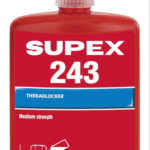
- Example product: Supex 242 or 243.
High Strength threadlocking (Permanent):
- Provides the strongest bond and is intended for applications where disassembly is not anticipated or requires heat and special tools.
- Example applications: Heavy machinery, engines.
- Example product: Supex 270 or 272.
Wicking Grade threadlocker
- Low-viscosity adhesive that “wicks” into preassembled fasteners to secure and seal them.
- Example applications: Electrical connections, set screws.
- Example product: Supex 290.
How to Choose the Right Threadlocking glue
| Application | Recommended Strength |
|---|---|
| Small screws | Low |
| Automotive | Medium |
| Heavy machinery | High |
| Preassembled fasteners | Wicking |
Properties of Thread locking anaerobic adhesives
- Anaerobic Cure: It cures in the absence of air and in the presence of metal ions, making them ideal for threaded metal fasteners.
- Temperature Resistance: Many formulations are designed to withstand extreme temperatures, ranging from sub-zero to over 500°F (260°C) for high-performance grades.
- Chemical Resistance: Most threadlockers resist chemicals like oil, fuel, and solvents.
- Sealant Properties: In addition to locking, they seal threads to prevent leaks or corrosion.
Application Tips
- Preparation: Clean threads thoroughly to remove grease, oil, or debris for optimal bonding.
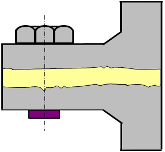
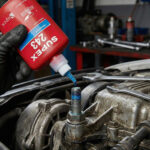
- Application: Apply a small amount to the fastener threads. For through holes, apply threadlocker on the bolt; for blind holes, apply it inside the hole.
- Assembly: Assemble the parts while the threadlocker is still wet.
- Curing Time: Allow sufficient time for curing. Most threadlockers set in 10–20 minutes but may require 24 hours for full cure.
Need for using Thread locking adhesives
Threadlocking glue keep fasteners secure when vibration, temperature changes, and daily wear try to loosen them. Although you tighten bolts properly, constant movement and stress can still cause them to back out over time. As a result, machinery becomes unstable, efficiency drops, and safety risks increase.
Loose fasteners lead to more than minor problems. They cause unexpected downtime, costly repairs, and sudden equipment failure. In demanding environments such as automotive and industrial applications, even one loose bolt can create serious safety hazards and lead to accidents or injuries. In addition, frequent inspections and re-tightening waste valuable time and increase maintenance costs.
Threadlockers solve these issues effectively. By applying a small amount, you create a strong bond that resists vibration, shocks, and temperature fluctuations. Whether you need a removable solution or a permanent lock, threadlockers deliver reliable performance. Consequently, they reduce downtime, lower costs, and improve safety. With threadlockers, fasteners stay secure, and equipment runs smoothly every day.
Benefits
1. Prevent Loosening of Fasteners
First, threadlocking anaerobic glue lock fasteners firmly in place. They resist vibration, motion, and shock. As a result, bolts and screws stay tight in machinery and vehicles.
2. Prevent Leaks and Corrosion
It seals threaded joints. They block moisture, fluids, and gases. Consequently, they reduce rust and corrosion. They also resist oils and chemicals for lasting protection.
3. Improved Reliability
Improves joint strength and stability. They maintain consistent torque and clamp load. Therefore, joints stay secure despite temperature changes.
4. Ease of Application
Technicians need minimal tools. In addition, wicking grades fix pre-assembled fasteners, saving time.
5. Versatility
Suits many applications. They come in low, medium, and high strengths. Moreover, they bond steel, stainless steel, and coated threads.
6. Cost Savings
By preventing loosening, threadlockers cut maintenance work. As a result, downtime drops and equipment lasts longer. This saves money.
7. Environmental Resistance
Threadlockers perform well in heat, cold, water, and chemicals.
8. Increased Safety
Finally, secure fasteners improve safety. They reduce failures and prevent accidents.
How to apply Supex threadlocking glue
APPLICATION TEMPERATURE:+5 ℃ to +45 ℃
1. For best results, the surface of the material to be bonded should be clean and free of grease.
2. To ensure fast and reliable curing, one bonding surface is coated with activator and the other surface is coated with glue. The parts
should be assembled immediately within 15 minutes.
3. It is recommended that the gap between the adhesive layer is 0.1mm. When the gap of the glue layer is too large (≤0.5mm) or fast
curing is required, an accelerator can be used. The components must be assembled quickly within one minute.
4. Excess threadlocker adhesive can be removed with organic solvents.
5. The bonded parts should be fixed until the adhesive is initially set.
6. After the adhesive has reached full strength, it can bear the load (full curing time is between 24 and 72 hours).
STORAGE AND SHELF LIFE
12 months in unopened packages in a cool and dry storage place at temperatures between +5 oC and 27 C, humidity between 30% and 70%. Optimal storage is at the lower half of this temperature and humidity range. To prevent contamination of unused threadlockers, do not return any material to its original container
PACKING
50mL, 250mL, 1000mL. Different packages are available
SAFETY
Keep out of reach of children. Before operation, please carefully read the specifications of products and material, and instructions on the package of container. For more information
about safety, please refer to the MSDS
Threadlocker FAQs
What is threadlocker used for?
It is used to secure threaded fasteners such as bolts, nuts, and screws to prevent loosening caused by vibration, shock, or thermal expansion. It fills the gaps between metal threads, creating a strong bond that keeps fasteners tight and prevents leaks, corrosion, and mechanical failure.
Threadlockers are commonly used in:
- Automotive assemblies
- Industrial machinery
- Pumps and compressors
- Electrical equipment
- Construction fasteners
- Heavy equipment maintenance
Using threadlocker improves reliability, reduces maintenance, and increases the lifespan of mechanical components.
How long does threadlocker take to cure?
Curing time depends on the strength grade, material type, and temperature, but most threadlockers follow this general timeline:
- Fixture Time: 10–30 minutes
- Handling Strength: 1–3 hours
- Full Cure Time: 24 hours
Curing occurs when the threadlocker is confined between metal surfaces in the absence of air. Faster curing may occur on active metals such as steel, while slower curing may happen on stainless steel or plated surfaces.
For best results:
- Allow at least 24 hours for full strength
- Avoid applying load before full curing
Can threadlocker be removed?
Yes, it can be removed depending on the strength grade used.
Removal methods:
- Low Strength Threadlocker: Can be removed using standard hand tools
- Medium Strength Threadlocker: Removable using normal hand tools with moderate force
- High Strength Threadlocker: Requires heat (typically 150–250°C) before removal
Applying controlled heat softens the adhesive, making disassembly easier and preventing damage to components.
What strength threadlocker should I use?
The correct strength depends on the application and required removability.
Here is a general selection guide:
| Application | Recommended Strength |
|---|---|
| Small screws (electronics) | Low Strength |
| Automotive bolts | Medium Strength |
| Machinery fasteners | Medium to High Strength |
| Permanent assemblies | High Strength |
| Preassembled fasteners | Wicking Grade |
Medium-strength threadlocker is the most commonly used because it provides strong holding power while still allowing future disassembly.
Is threadlocker waterproof?
Yes, all anaerobic glues are water-resistant and leak-proof once fully cured.
It seal the gaps between threaded parts, preventing:
- Water penetration
- Oil leaks
- Coolant leaks
- Chemical seepage
- Corrosion formation
This makes threadlockers suitable for applications exposed to moisture, fluids, and harsh industrial environments.
Can threadlocker be reused?
No, they cannot be reused once cured.
After disassembly:
- Old glue residues must be cleaned from threads
- Fresh adhesive should be applied before reassembly
What temperature can threadlocker withstand?
Anaerobics are designed to withstand a wide range of temperatures depending on the grade.
Typical temperature resistance:
- Standard Threadlockers: −55°C to +150°C
- High-Temperature Threadlockers: Up to +230°C or higher
- Specialty Grades: Up to +250°C+
These properties make threadlockers suitable for:
- Engine components
- Industrial equipment
- Pumps and compressors
- High-heat mechanical systems
Always select a threadlocker grade based on the operating temperature of the application.