
What is a Gasket Sealant?
Gasket sealant is a high-performance solution used to create leak-proof seals between flanges and joints. Liquid gasket sealants such as RTV silicone and anaerobic flange sealants replace traditional gaskets, improve sealing reliability, and extend equipment life in automotive and industrial applications.
Why Traditional Gaskets Leak
- Even best-machined
 flanges have tiny irregularities that solid gaskets can’t fully seal—worse on cast or sheet metal parts.
 - Gaskets lose compression over time (compression set).
- Pressure and vibrations push them out.
- Hard to find exact replacement sizes during repairs.
 flanges have tiny irregularities that solid gaskets can’t fully seal—worse on cast or sheet metal parts.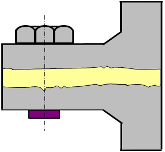

Key Benefits of Liquid Gasket Sealants
Liquid gasket sealants offer reliable sealing performance across a wide range of industrial and automotive applications. Unlike traditional gaskets, Supex flange sealants create a custom-fit seal that prevents leaks and improves equipment durability.
1. Leak-Proof Sealing Performance
Supex flange sealants form a continuous, airtight seal that prevents leakage of oil, coolant, water, and gases. This ensures consistent performance in engines, pipelines, and industrial machinery.
2. Fills Surface Irregularities
Unlike solid gaskets, liquid gasket sealants adapt to uneven surfaces and fill small gaps, scratches, and imperfections. This improves sealing efficiency and reduces the risk of failure.
3. High Temperature Resistance
Supex metal flange sealants are designed to withstand extreme temperatures, making them suitable for high-heat environments such as engines, exhaust systems, and industrial equipment.
4. Resistant to Chemicals and Fluids
Supex flange sealants provide excellent resistance to oils, fuels, coolants, and industrial chemicals, ensuring long-lasting performance even in harsh operating conditions.
5. Reduces Maintenance and Downtime
By creating a durable and reliable seal, liquid gasket sealants help reduce maintenance frequency, prevent leaks, and minimize costly downtime.
6. Easy Application and Fast Curing
Liquid gasket sealants are easy to apply directly to flanges and joints. Many formulations offer quick curing times, allowing faster assembly and reduced production delays.
7. Replaces Traditional Gaskets
Supex metal flange sealants can eliminate the need for pre-cut gaskets, reducing inventory requirements and simplifying installation processes.
8. Long-Lasting Durability
High-performance liquid gasket sealants maintain sealing strength over extended periods, even under vibration, pressure, and thermal cycling.
Types of Liquid flange Sealants
Silicone-Based Sealants (RTV – Room Temperature Vulcanizing):
- Highly flexible, heat-resistant, and waterproof.
- Used for automotive engines, valve covers, and water pumps.
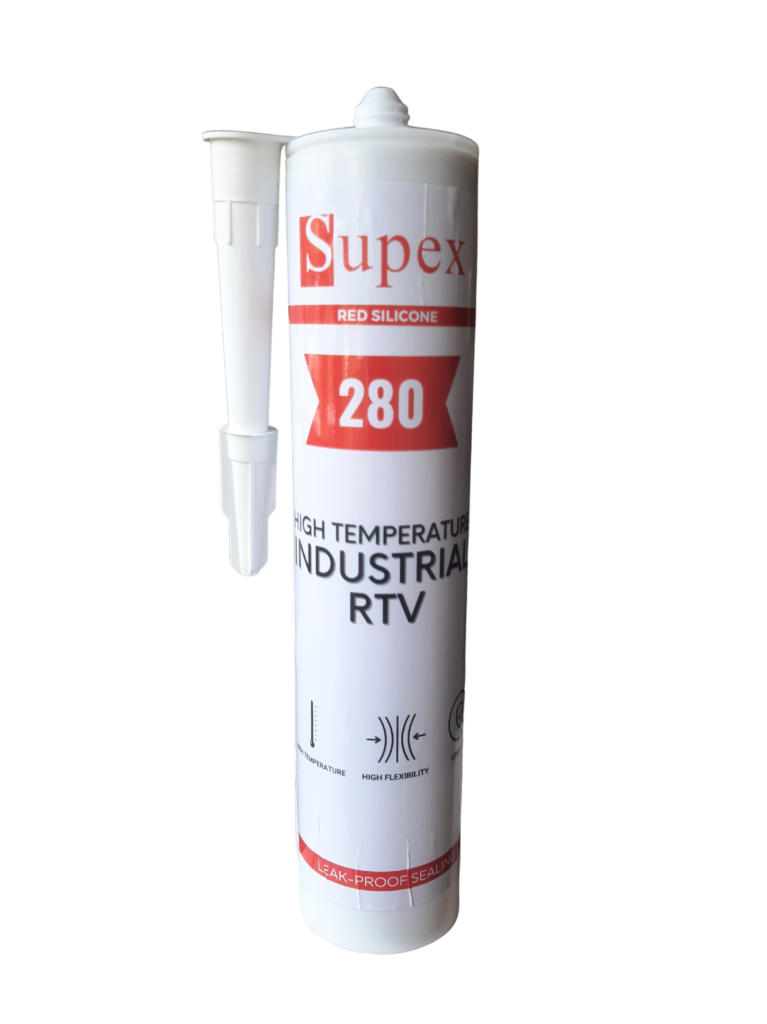
- Example: Supex 280 Silicone RTV
Anaerobic Gasket Sealants:
- Designed for metal-to-metal joints with minimal gaps.
- Cures in the absence of air, forming a strong, durable seal.
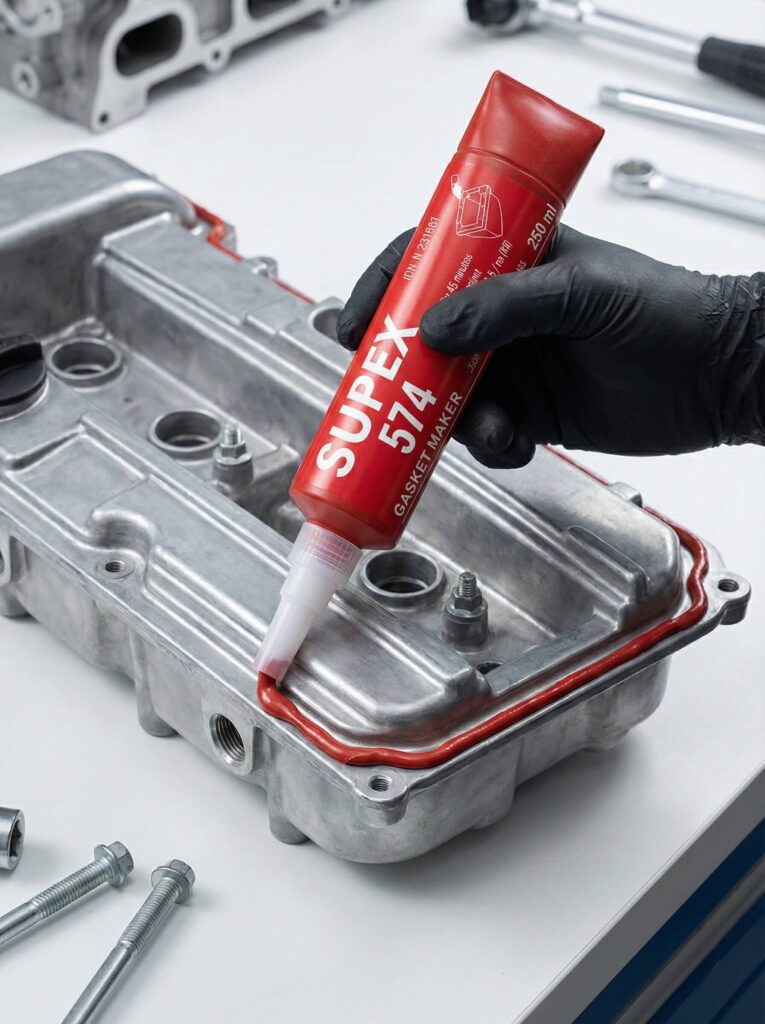
- Example: Supex 574
Non-Hardening Sealants:
- Remain soft and pliable to handle vibration and thermal expansion.
- Ideal for gaskets that may need frequent removal or adjustment.
Copper-Based Sealants:
- Contain metallic particles for improved heat resistance and conductivity.
- Commonly used in high-temperature applications, such as exhaust systems.
Applications of Gasket Sealants
Liquid gasketing is becoming very popular with Automotive industry. All the automotive manufacturers , viz: Passenger cars, 2 wheelers, Commercial vehicles, Tractors, Agricultural machines, Railway Engines, Gensets use Liquid gaskets for all critical flange joints.
- Oil pan sump gasket sealing
- Head gasket dressing with high temperature sealant
- camshaft cover sealing
- transmission cover sealing
- exhaust manifold gasket sealer
- differnetial gasket sealer
- thermostat gasket sealer
- water pump gasket sealer
- fuel pump gasket sealer
- valve cover gasket maker
Process plants like Power, Steel, Paper, Waste water treatment, Mining industry, textiles use ‘Liquid gasketing’ for flange sealing of various equipment like Gear Box , Oil pan, Cam shaft cover, transmission buckle up etc.
How to Use metal flange Sealant
Using metal flange sealant correctly ensures a strong, leak-proof seal between flanges and mating surfaces. Follow these simple steps for reliable application and long-lasting performance.
Step-by-Step Guide to Using Liquid Gasket Sealant
1. Clean the Surface Thoroughly
Remove old gasket material, dirt, oil, grease, and debris from the flange surfaces. Use a suitable cleaner or solvent to ensure the surface is completely clean and dry before applying the liquid gasket sealant.
2. Apply the supex Sealant Evenly
Apply a continuous bead of liquid flange sealant along the flange surface. Ensure the bead covers all sealing areas without gaps. Avoid applying too much sealant, as excess material may squeeze out during assembly.
3. Assemble the Parts Immediately
Carefully join the mating surfaces and align the components properly. Tighten bolts gradually and evenly in a crisscross pattern to distribute pressure uniformly across the flange.
4. Allow Proper Curing Time
Let the liquid gasket sealant cure according to the manufacturer’s instructions. Initial setting may occur within minutes, but full curing typically takes several hours to achieve maximum sealing strength.
5. Inspect the Seal
After curing, inspect the joint for any visible gaps or leaks. If necessary, reapply the sealant and repeat the process to ensure a secure seal.
Best Practices for Applying Liquid Gasket Sealant
- Use the correct type of sealant for the application, such as RTV gasket sealant or anaerobic gasket sealant.
- Apply a consistent bead thickness for uniform sealing.
- Avoid over-tightening bolts, which may damage the seal.
- Follow recommended curing times before exposing the joint to pressure or fluids.
FAQs on Liquid Gasket Sealants
What is gasket sealant used for?
Supex Flange sealant is used to create leak-proof seals between metal flanges, preventing oil, coolant, and gas leaks in engines and machinery.
What is the difference between RTV and anaerobic flange sealant?
RTV sealants cure with moisture and suit flexible joints, while anaerobic sealants cure without air and work best on rigid metal flanges.
How long does metal flange sealant take to cure?
RTV gasket sealants typically set within 2 hours and fully cure within 24 hours.
Can Liquid sealant replace traditional gaskets?
Yes, liquid gasket sealants can replace traditional gaskets by forming custom in-place seals.
Can I Use Silicone Instead of a Solid Gasket? Yes! RTV silicone sealants are excellent replacements, especially for cast, stamped, or sheet metal flanges with gaps over 1mm. They withstand temperatures up to 250°C and pressures up to 10 bars.
How Long Do Liquid Gaskets Take to Dry? RTV silicone needs 2 hours to set and 24 hours for full cure before adding fluids. Anaerobic sealants cure in about 1 hour.
Do I Need Sealant on a Rubber Gasket? Yes—coating both sides ensures a longer-lasting, leak-free seal. For rubber used as spacers, apply sealant to flange faces for maximum protection until maintenance.
3 Responses
Thanks for providing this blog related to liquid-gasket-sealant. You have explained each & everything like how to use and involved in which applications.
thank you for the blog