
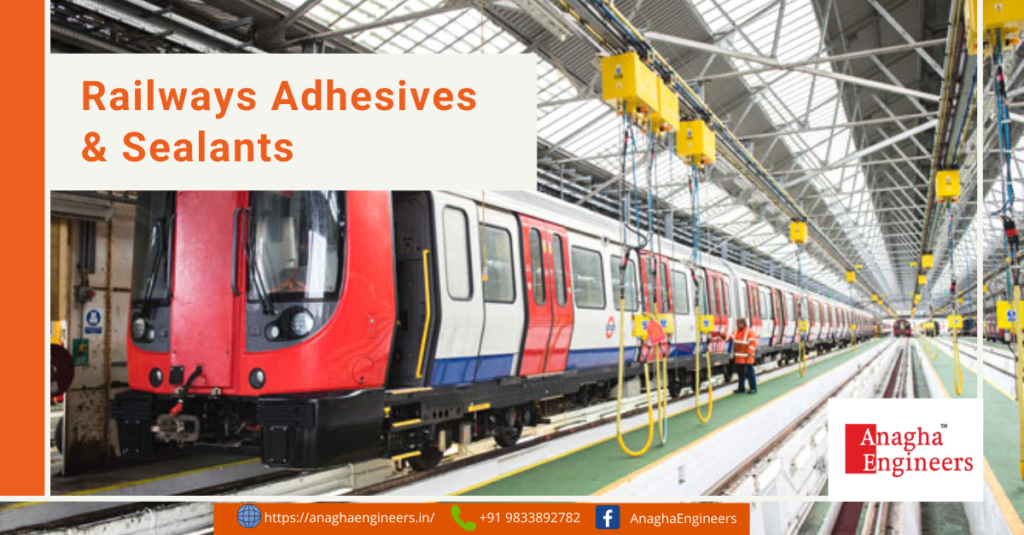
Railway manufacturing and maintenance involve thousands of components, joints, panels, and assemblies. These parts must withstand vibration, temperature changes, moisture, mechanical loads, and long service periods.
This makes reliable bonding and sealing important across the railway industry.
Adhesives and sealants used in Indian Railways can support structural bonding, component assembly, seam sealing, insulation, equipment protection, and specialised applications such as glued rail joints.
For railway OEMs, coach manufacturers, engineers, maintenance teams, fabricators, and procurement professionals, choosing the right product requires more than checking bond strength. The adhesive or sealant must match the substrate, joint design, service conditions, manufacturing process, and applicable railway specification.
Why Are Adhesives and Sealants Used in Indian Railways?
Welding, riveting, bolting, and mechanical fastening remain essential joining methods. However, adhesive bonding and sealing can offer useful alternatives for selected applications.
A suitable railway adhesive can help:
- Join different materials
- Reduce drilling and mechanical fastening
- Avoid heat input in suitable assemblies
- Create cleaner finished surfaces
- Distribute loads across a bonded area
- Accommodate movement and vibration
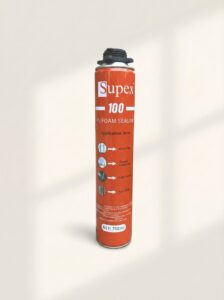
Sealants serve a different purpose. They close gaps, seams, and interfaces and can protect them from moisture, dust, air, and environmental exposure.
The right product depends on the application. There is no single adhesive or sealant suitable for every railway component.
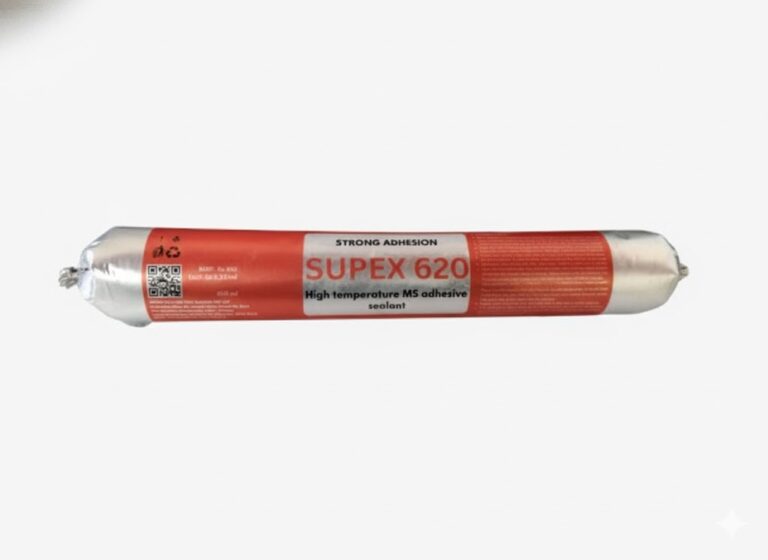

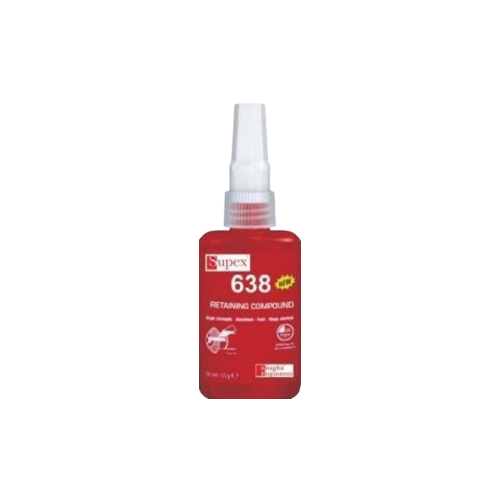
Types of Adhesives Used in Railway Applications
Different railway applications require different adhesive technologies.
Epoxy Adhesives
Epoxy adhesives offer high strength, rigidity, and resistance to many environmental conditions. They can be used for demanding bonding applications involving metal and other substrates.
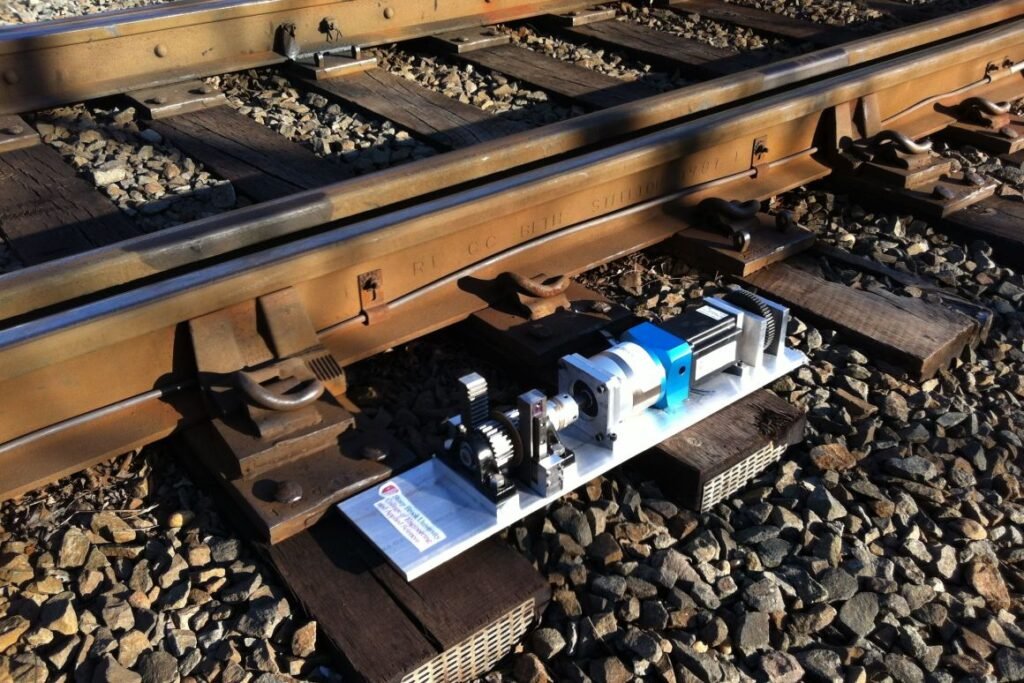
RDSO’s Manual for Glued Insulated Rail Joints specifies epoxy-based adhesive systems for particular glued rail-joint applications, along with fabrication, testing, and approval requirements.
Structural Adhesives
Structural adhesives are designed for applications where the bonded joint needs reliable mechanical performance.
Depending on the formulation, they can bond metals, composites, plastics, and mixed substrates. Suitable applications may include panels, brackets, equipment housings, and coach components.
Acrylic and MMA Adhesives
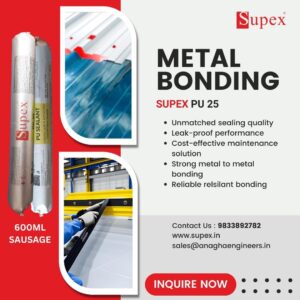
Acrylic and methyl methacrylate (MMA) adhesives can provide high-strength bonding, impact resistance, and fast curing.
They may suit metal and mixed-material assemblies where production speed and structural performance are important.
Polyurethane Adhesives
Polyurethane adhesives offer a balance of strength and flexibility. They can be considered where joints need to accommodate movement, vibration, or thermal expansion.
Specialised Adhesives
Rubber-based, contact, and anaerobic adhesives may be used for specific requirements such as interior components, insulation, thread locking, thread sealing, and retaining applications.
The adhesive chemistry should always be selected according to the application.
Types of Sealants Used in Indian Railways
Sealants primarily close joints and protect interfaces.
Depending on the application, railway sealing requirements may involve silicone, polyurethane, polysulfide, butyl, rubber-based, or specialised fire-resistant formulations.
Important properties can include:
- Flexibility
- Moisture resistance
- Weather resistance
- Chemical resistance
- Temperature resistance
- Substrate adhesion
- Paintability
- Fire performance where specified
Fire safety is particularly important in railway equipment. Where a specification requires fire-resistant or intumescent sealing materials, the product must meet the relevant testing and performance requirements.
Where Are Railway Adhesives Used?
The applications of railway adhesives vary across rolling stock, equipment, track systems, and manufacturing processes.
Railway Coach Manufacturing
Adhesives can support suitable panels, interior components, fixtures, and mixed-material assemblies.
In some designs, adhesive bonding can reduce the need for drilling, riveting, or welding.
Locomotives and Equipment
Adhesives can be used for selected equipment housings, panels, brackets, electrical assemblies, and interior components.
The product must be compatible with the substrate and operating environment.
Interior Panels and Flooring
Adhesives can support selected interior panels, trims, insulation, and flooring-related applications.
They can also provide a cleaner finished appearance by reducing exposed mechanical fasteners.
Window and Glazing Applications
Specialised adhesives and sealants can be used for suitable window and glazing assemblies.
Selection depends on the glass, frame or body material, joint design, weather exposure, and curing requirements.
Elastomeric Components
Adhesive bonding is also relevant to certain elastomeric railway components.
An RDSO specification for elastomeric pads defines requirements for adhesive application to coated metal plates, including surface preparation, application conditions, and quality control.
Glued Insulated Rail Joints
Glued insulated rail joints are a specialised railway application.
RDSO documentation defines designs, materials, fabrication procedures, and testing requirements for these joints.
This application should be treated separately from general coach or equipment bonding.
Where Are Railway Sealants Used?
Railway sealants can be used where joints need protection from environmental exposure.
Typical areas may include:
- Coach seams and joints
- Roof and side-panel interfaces
- Window assemblies
- Electrical enclosures
- Equipment housings
- Cable entry points
- Interior and exterior joints
- Fire-barrier applications where specified
The required properties depend on the location. An exterior seal may require weather resistance, while an electrical or fire-related application may have specific fire-performance requirements.
Rail Adhesives
How to Select Railway Adhesives and Sealants
Product selection should start with the application.
Substrate
Identify the materials being joined or sealed, such as steel, stainless steel, aluminium, composites, plastics, glass, rubber, or coated surfaces.
Joint Design
Consider bond area, gap, thickness, load direction, and expected movement.
Operating Environment
Evaluate temperature, vibration, moisture, chemicals, UV exposure, and other service conditions.
Required Function
Determine whether the requirement is structural bonding, elastic bonding, sealing, locking, repair, or another function.
Production Process
Cure time, fixture time, application method, production volume, and available equipment can affect product selection.
Surface Preparation
Oil, dust, oxidation, moisture, and unsuitable coatings can reduce adhesion. Surface preparation should follow the product’s technical guidance and applicable railway requirements.
RDSO Specifications and Approval Requirements
For Indian railway applications, technical specifications are an important part of product selection.
A product should not be described as “Indian Railways approved” simply because it can bond metal or seal a joint.
The relevant RDSO specification, drawing, tender requirement, coach or wagon specification, production-unit requirement, or other applicable document should be checked for the specific application.
Some RDSO documents define detailed requirements for adhesive application, testing, process control, approved sources, and quality audits.
Adhesive or Sealant: Which One Do You Need?
The distinction is simple.
An adhesive is primarily used to join two substrates.
A sealant is primarily used to close a gap or joint and protect the interface.
Some products can perform both functions, but the required performance must be validated for the specific application.
Conclusion
Adhesives and sealants used in Indian Railways support a wide range of bonding, assembly, and sealing requirements.
Structural adhesives can support selected component assemblies. Flexible adhesives can accommodate movement and vibration. Sealants can protect seams and interfaces. Specialised adhesive systems also have defined roles in applications such as glued insulated rail joints and elastomeric component manufacturing.
There is no single product suitable for every railway application.
The right solution depends on the substrate, joint design, operating environment, manufacturing process, required performance, and applicable railway specification.
For railway OEMs, engineers, procurement teams, maintenance professionals, and suppliers, the best approach is to define the application first and then select and validate the adhesive or sealant accordingly.
Looking for an adhesive or sealant for a railway application? Share the substrate, joint design, operating conditions, production process, and applicable specification with the Supex technical team to identify a suitable industrial bonding or sealing solution.