



What is PU Sealant?
PU sealant is a one-component, moisture-curing polyurethane sealant that forms a flexible, elastic, and durable seal or bond. It adheres strongly to metals, concrete, wood, and plastics while resisting vibration, weathering, and movement.
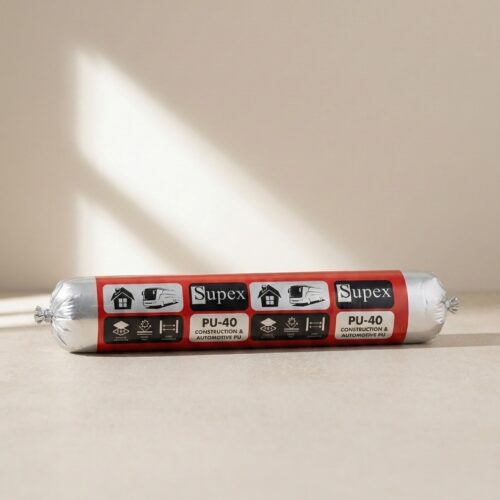
Supex PU 40 PU Sealant | Best Polyurethane Sealant for Construction & Automotive in India
Are you searching for a reliable PU sealant? Look no further. Supex PU 40 stands out as a top choice. This high-quality PU sealant delivers strong bonds and seals. Professionals trust it for tough jobs. Let’s explore why.
Why Supex PU 40 is the Top PU Sealant Choice ?
Supex PU 40 uses a one-part polyurethane base. You apply it easily. It cures with atmospheric moisture. Thus, it forms a durable elastomer quickly. The color is white. Its density reaches about 1.30 kg/l when uncured. Additionally, it offers good non-sag properties. You avoid messy drips during use.
The tack-free time ranges from 30 to 60 minutes. Cure rate hits 3 mm per 24 hours. Shore A hardness varies between 30 and 60. Tensile strength exceeds 2 N/mm². Elongation at break nears 600%. Tear strength measures around 12 N/mm. Service temperature spans -40°C to +90°C continuously. For short terms, it handles up to 120°C. Shelf life lasts 9 months below 25°C.
Key Benefits
First, enjoy the one-component formulation. You mix nothing. Second, it stays elastic. Third, low odor keeps your workspace fresh. Fourth, it resists aging and exposure. Therefore, it lasts longer outdoors.
Moreover, it’s non-corrosive. You paint over it easily. You sand it too. It bonds well to many substrates. For example, timber, metals, and plastics adhere firmly. Ceramics and concrete work great as well. This PU sealant suits diverse needs.
Typical applications of Supex PU 40 PU sealant
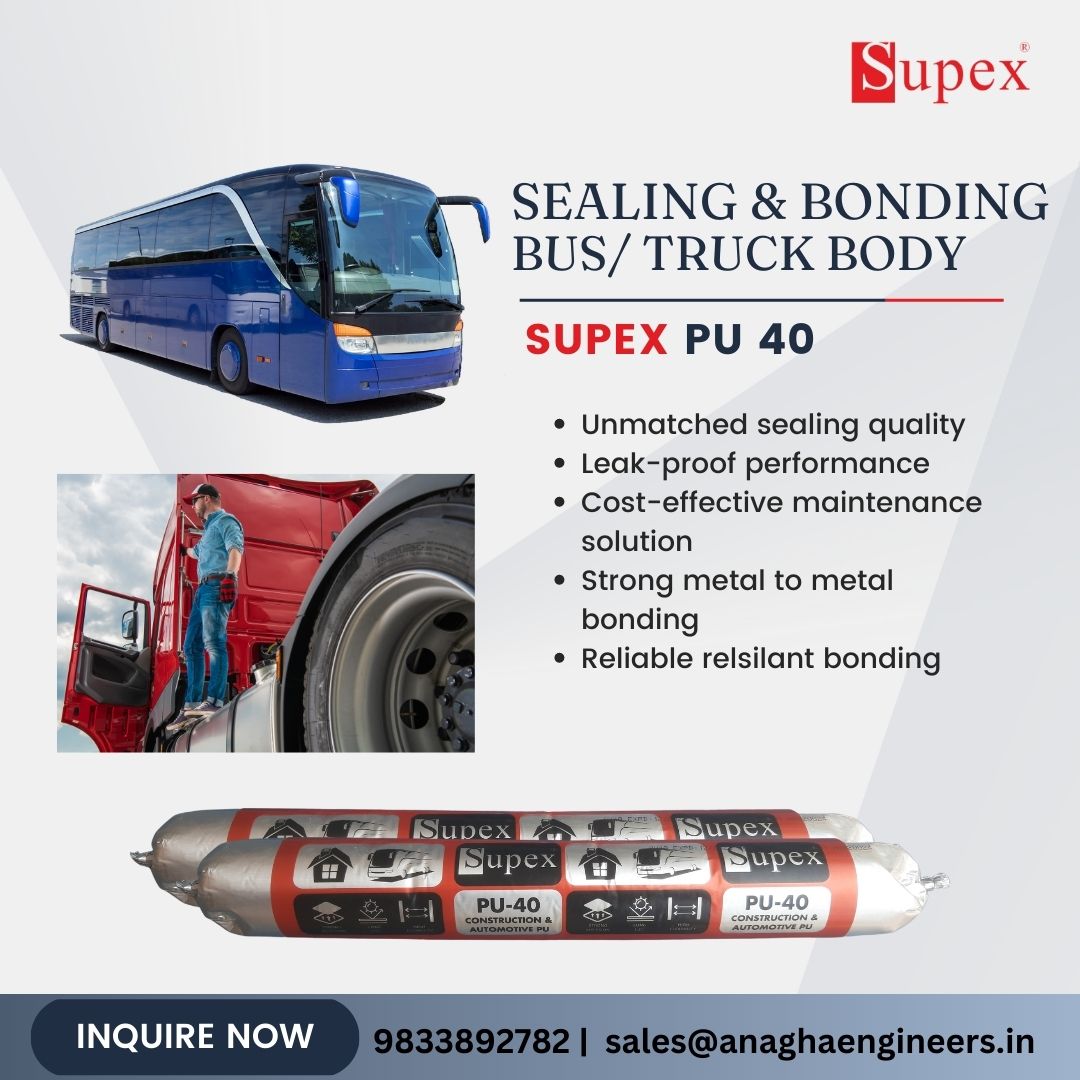
- Automotive & Bus Body Building Seals joints, panels, frames, and metal assemblies; provides vibration resistance and long-term durability.
- Construction & Building Fills expansion joints, seals concrete gaps, facades, windows, and door perimeters for weatherproof performance.
- Industrial Machinery Bonds and seals metal-to-metal joints, HVAC ducts, and equipment enclosures in demanding environments.
- Roofing & Waterproofing Seals roof joints, flashing, and penetrations to prevent leaks in Indian climatic conditions.
- Acoustic & Interior Applications Installs acoustic panels and seals gaps for soundproofing in commercial spaces.
- General Sealing Bonds dissimilar materials (metal, concrete, wood, glass) where high elasticity and strong adhesion are required.
Chemical Resistance and Durability of PU Sealant
Supex PU 40 resists fresh water and seawater. It handles limewater and sewage effluent. Diluted acids and caustic solutions pose no issue. Temporarily, it withstands fuels and mineral oils. Vegetable and animal fats resist too.
But avoid organic acids and alcohol. Concentrated mineral acids damage it. Solvents harm it as well. Seek advice for specific uses. This ensures optimal performance.
How to Apply
Prepare surfaces first. Clean them thoroughly. Remove grease, oil, and dust. Use cleaners or primers if needed.
For cartridges, pierce the membrane. Peel it back. For sausage, snip the closure clip. Cut the nozzle tip to fit joint width. Gun the sealant in. Avoid air entrapment.
Apply between 15°C and 25°C ideally. Do not use below 5°C or above 35°C. Tool within tack-free time. Overpaint when tack-free. Test paints for compatibility.
Clean uncured material with Supex Remover. Remove cured material mechanically. Wash hands with industrial cleanser. Skip solvents.
Order in 600 ml sausage. Store properly. Refer to Material Safety Data Sheets for safety.
PU Sealant vs Silicone Sealant
- Flexibility & Movement — PU sealant offers excellent elasticity and handles high joint movement (up to ±25%); silicone excels in extreme movement (±50%) with superior long-term flexibility.
- Adhesion — PU bonds strongly to porous surfaces (concrete, wood, brick) and many metals/plastics without primer; silicone adheres well to non-porous (glass, metal) but may need primer on porous.
- Paintability — PU is easily paintable with most paints; silicone is generally not paintable.
- Weather/UV Resistance — Silicone outperforms in UV, weathering, and outdoor exposure (no yellowing/cracking); PU may degrade faster in direct sun.
- Cure & Use — PU cures faster in humid conditions, ideal for construction/bus body; silicone cures slower but better for glazing/aquariums.
- Best For — Choose PU for structural/elastic bonding in India’s varied climate; silicone for waterproof, UV-exposed joints like windows/glass.
Frequently Asked Questions about Supex PU 40
1. What is the best PU sealant for automotive joints?
Supex PU 40 is the best PU sealant for automotive joints. It offers excellent flexibility, vibration resistance, and strong adhesion to metals and composites in bus bodies and vehicles.
2. How to apply Supex PU 40?
Clean and dry surfaces first. Cut the nozzle, insert into caulking gun, and apply evenly. Tool the bead within 10–15 minutes. Allow 24 hours for full cure.
3. What is the difference between PU sealant and silicone sealant?
PU sealant like Supex PU 40 provides higher elasticity and paintability. Silicone sealant resists UV better but lacks strong adhesion on metals and is harder to paint over.
4. Is Supex PU 40 suitable for construction joints?
Yes, Supex PU 40 excels in expansion joints, concrete gaps, and facades due to its weather resistance and durability in Indian climates.
5. How long does Supex PU 40 PU sealant take to cure?
Skin forms in 60–90 minutes. Full cure takes 24–48 hours depending on humidity and thickness.
6. Can I paint over Supex PU 40 PU sealant?
Yes. This PU sealant is highly paintable with most paints after full curing.
7. What surfaces does Supex PU 40 PU sealant bond to?
It bonds well to metals, concrete, wood, glass, plastics, and composites with excellent adhesion.
8. Is PU sealant waterproof?
Yes, PU sealant (polyurethane sealant) like Supex PU 40 is waterproof and provides excellent long-term resistance to water, moisture, fresh water, seawater, and many chemicals once fully cured. It forms a flexible, durable, elastic seal that prevents water ingress in joints, gaps, and bonds — making it ideal for construction (expansion joints, facades), automotive (bus body sealing), and industrial applications exposed to rain, humidity, or wet conditions in India’s varied climate.
Key Points on Water Resistance
- Waterproof performance: Creates watertight barriers; resists water penetration, weathering, and aging (as per industry standards).
- Chemical resistance: Handles fresh water, seawater, limewater, diluted acids, and sewage effluent without degrading.
- Limitations: Not suitable for continuous submersion (e.g., underwater or constant ponding) or application on wet surfaces during installation — apply to clean, dry substrates for best results. In extreme prolonged immersion, specialized underwater sealants may be better.
- Supex PU 40 specifics: Offers superior weather/water resistance, UV/chemical durability, and remains elastic under movement — perfect for exterior/indoor use where moisture exposure is common.
For marine/offshore or heavy water contact, pair with proper joint design or consider alternatives like silicone for superior UV resistance. Always refer to the latest TDS for exact guidelines!
In summary, Supex PU 40 excels as a PU sealant. It combines strength, flexibility, and ease. Choose it for your next project. You won’t regret it.