
How to Apply Polyurethane Foam Spray Insulation
Follow this simple procedure to apply polyurethane foam spray effectively:
- Clean surfaces thoroughly. Remove all dust, dirt, grease, and oil.
- Always wear safety glasses and gloves for protection.
- Moisten the surface lightly with a water spray bottle. This helps expansion.
- Shake the can vigorously about 20 times.
- Screw the straw onto the can securely.
- Turn the can upside down before use.
- Fill the joint to about 50%. The foam expands significantly.
- Cut excess foam after it cures, usually in 30–60 minutes.
How Do You Seal Windows with polyurethane foam spray?
Builders and homeowners often seal around windows and doors with polyurethane foam spray. This product fills gaps perfectly. Additionally, it expands just enough without causing pressure or distortion.
What Happens If Cured PU Foam Stays Uncovered?
Polyurethane foam lacks UV resistance. Therefore, uncovered foam changes color quickly. It turns dark yellow from light yellow within days. Over time, prolonged exposure causes the foam to disintegrate.
How to Protect Cured PU Foam from UV Rays
Protect cured foam easily. Cover it with plaster, plaster of Paris, or polysulphide sealant (ideal for expansion joints). In some cases, apply acrylic elastomeric paints. Where appearance matters less, you can paint directly on the foam.
How Cost-Effective Is Expandable polyurethane foam spray?
A 750 ml dispenser yields impressive coverage. It expands to at least 35 liters (35,000 cc). After accounting for 10% handling loss, you still get around 32,000 cc of effective coverage.
On Which Surfaces Can You Apply Polyurethane Foam Spray?
Apply polyurethane foam on many surfaces. It bonds well to wood, metal, concrete, brick, and plaster. However, avoid polyethylene, polypropylene, silicone, and Teflon. These materials prevent proper adhesion.
Is It Necessary to Moisten the Surface Before Using Foam Insulation Sealant?
Yes, we strongly recommend moistening the surface. The foam system requires water to cure properly. Additionally, you gain several benefits. First, you achieve better cell structure. Second, adhesion improves significantly. Third, curing happens faster. Finally, overall foam quality rises.
Is Expansion Foam Resistant to Water?
Cured foam creates a strong barrier against moisture. However, small amounts of water vapor migrate through over time. This depends on whether the skin remains intact. If the skin stays on, weight increases only by 5%. If you cut the skin away, weight can rise up to 150%. In that case, the foam loses water resistance. Water vapor permeability varies with density and cell structure. More open cells or lower density increase permeability.
How Much Does PU Foam Spray Sealant Expand?
Expansion differs between types. Hand-held foam expands 150–200%. Therefore, fill joints only 40–50%. Gun foam expands 50–100%. So, fill joints at least 50%. Factors like ambient temperature, can temperature, and humidity influence expansion.
How Should You Store an Opened Can of Gun Foam Spray?
The best option keeps the can attached to the gun. If you remove it, clean the valve and gun thoroughly with Gun & Foam cleaner. We advise using the remaining foam within the next few weeks.
Does Insufficient Shaking Affect PU Foam Negatively?
Yes, polyurethane foam spray contains prepolymer and propellant gas. These separate into layers during storage. You must shake the can vigorously beforehand. This creates a homogeneous mixture. Poor shaking leads to coarse cell structure and lower foam volume.
How Much Should You Shake the Can?
Shake the canister 15 to 20 times. This ensures a perfect mix of the two components.
Does the canister need to be shaken again during use?
It is recommended to shake the can occasionally during use, and especially after interruptions, to avoid re-separation of the propellant & prepolymer.
How does the insulation foam get the right amount of moisture?
Fresh foam absorbs moisture from its surroundings. In particularly dry environments it makes sense to wet the surfaces to be joined. But standing water droplets are to be avoided, as in this case the water would actually become a barrier to proper adhesion.
What happens when there is insufficient moisture on the surfaces ?
A lack of moisture leads to inefficient curing of the foam and, depending on the amount of foam applied, may lead to foam compression – even months later.
Is there any way to accelerate the curing process?
Yes, wetting; ideally from a spray gun. This will help to speed up the hardening process.
Is cured foam subject to ageing?
Cured foam does not age. There has never been a case during the thirty years that polyurethane foam spray has been in use that any failure has occurred through ageing.
Can gaps between insulation panels be filled with PU foam spray?
Yes, one-component polyurethane insulation spray foam can be freely used for such applications. It is free from solvents and does not attack polystyrene.
Is it OK to leave half-empty canisters attached to applicator guns?
Yes; in fact we recommend leaving a partially-full container attached to the gun. To store the gun and canister safely, the security screw should be tightened to secure the trigger.
Is it necessary to remove excess foam from the adapter, or can I simply insert the next canister?
Though the adapters are constructed from a non-stick material, it is advisable to remove any excess foam straight away with gun cleaning fluid: well-maintained tools last longer.
How long can a partially used container be left attached to a gun?
If the trigger has been completely secured with the security screw, a canister can be stored attached to the gun for a period of one to two weeks.
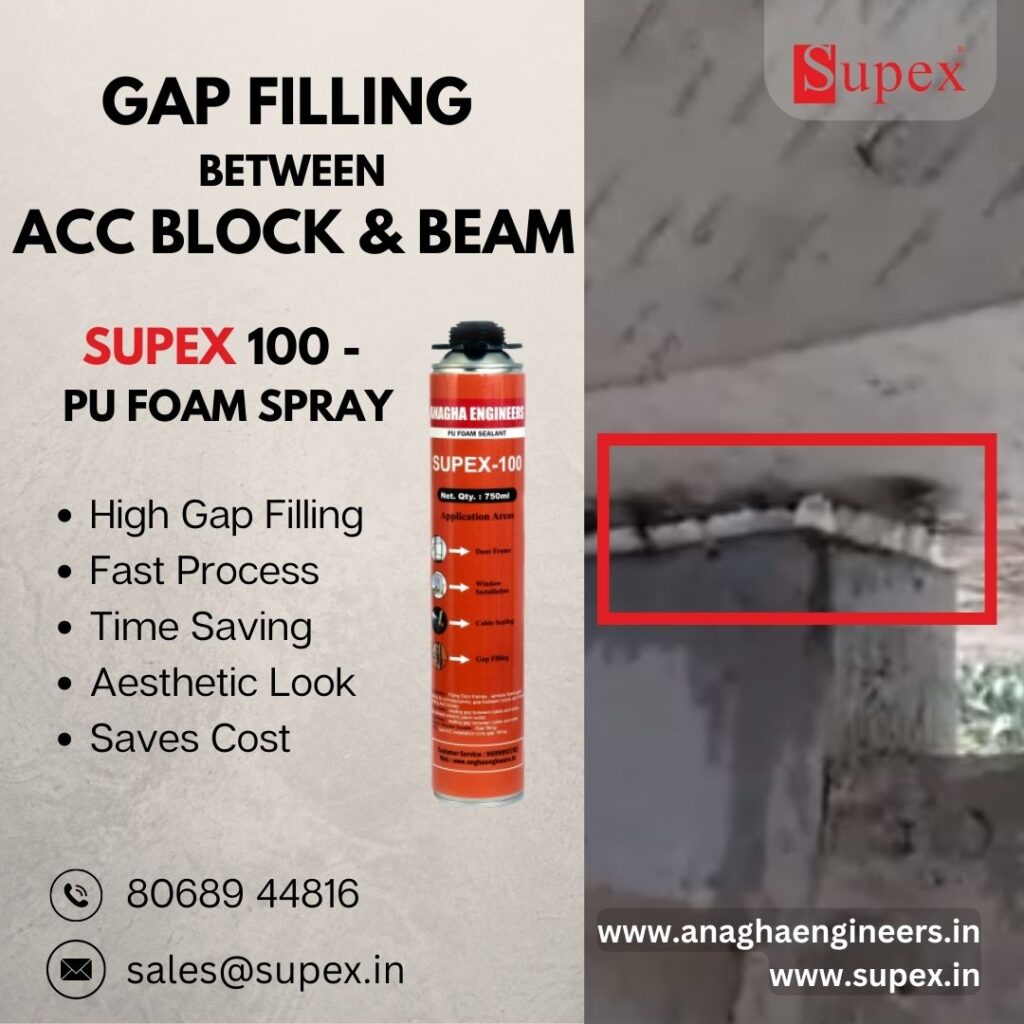
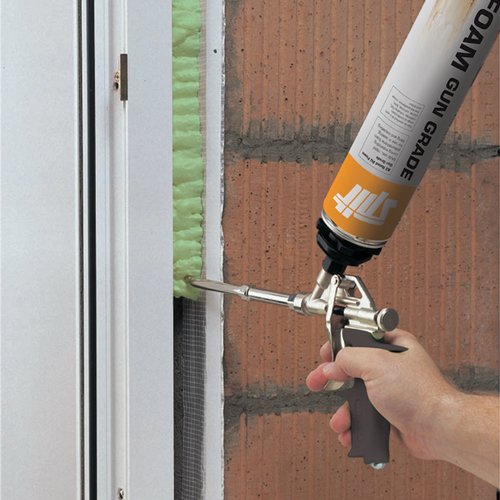
Why Maintain a Minimum 10 mm Gap Around Window Perimeter?
A 10 mm gap along the entire perimeter lets PU foam spread smoothly across the wall surface. Additionally, it offers enough space for proper expansion. This gap holds sufficient foam volume. As a result, you get the required strength and strong binding between wall and window.
Is Polyurethane Foam Spray Fireproof?
No foam is completely fireproof. However, options exist. B3 grade foam is standard (non-flame-retardant). B1 grade foam provides flame-retardant properties.
Do You Need Training to Apply PU Foam?
Application stays very easy. No special skills are necessary. Still, first-time users benefit from training. Sales staff or dealers provide quick guidance.
What Precautions Should You Take During Application?
- Avoid contact with skin and clothes. If foam sticks, clean immediately with PG2 PU Foam Cleaner.
- Keep the nozzle away from your body.
- Always hold the can inverted during use.
- Remove cured foam mechanically.
What Is the Purpose of Remover? Can Alternatives Work?
Remover cleans dispenser guns and needles effectively. You mount it directly on the gun. Other materials risk damaging the gun.
How to Clean Uncured PU Foam?
Wipe off wet foam quickly with a cloth. Then, use acetone, nail polish remover, or polyglycol-based cleaner. Finally, wash with soap and water.
How to Remove Cured Expanding Foam?
Wipe off any soft foam first. Next, blot repeatedly with acetone until it lifts.
How Easily Can You Remove a PU Foam-Mounted Window?
Slice through the foam carefully for easy removal. However, forcing the window out proves nearly impossible.
Does Foam Exert Pressure During Expansion?
Yes, foam builds pressure while expanding and hardening. Therefore, fill gaps only one-third full.
What to Do with Excess Foam Around Doors/Windows?
Cut away cured excess neatly with a knife or saw.